The Thing (1982). Full autopsy of John Carpenter's masterpiece
The cinematography that lied to your face. The practical effects that nearly killed the man who built them. The score that was rejected and then won an Oscar. Dr. Frame's first forensic examination.

Admission.
On June 25, 1982, a shapeshifting organism was released into 840 American theaters. It arrived on the same day as Blade Runner and two weeks after E.T. had already infected the entire country with goodwill toward extraterrestrials. The timing could not have been worse. Universal's head of distribution, Robert Rehme, had privately told co-producer Stuart Cohen that the studio was counting on The Thing to be the summer's hit. They believed E.T. would only appeal to children. Producer David Foster would remember his own prognosis with the precision of a coroner's report: "We're dead." Opening weekend confirmed it: eighth place, $3.1 million, 840 screens. The reviews read like an autopsy performed with a chainsaw. Vincent Canby of the New York Times declared it "instant junk." Cinefantastique called it "cold and sterile." The Razzies nominated Ennio Morricone for Worst Musical Score. A woman vomited during an early screening, right in front of the studio chief's wife. The patient, by all clinical standards, was pronounced dead on arrival.
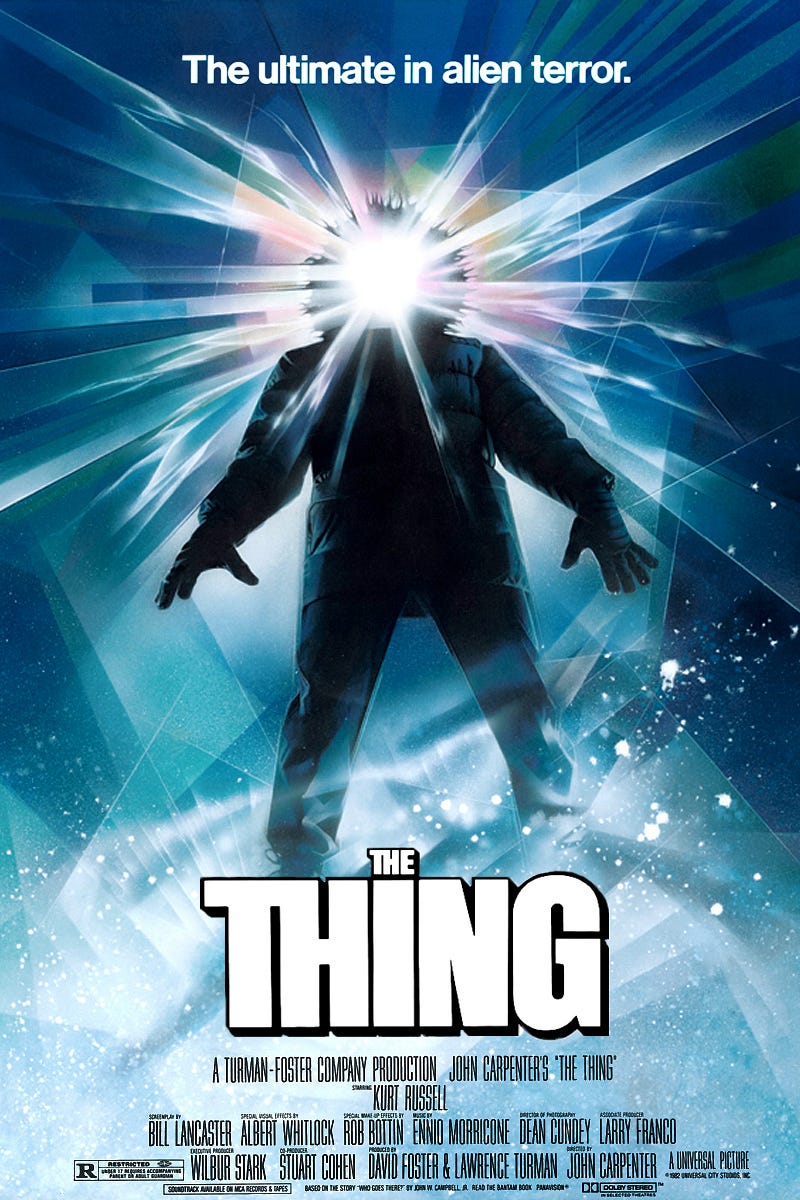
The critical response was not merely negative. It was hostile, as if the film had personally offended every reviewer who sat through it. One called it “the quintessential moron movie of the 80s.” Another dismissed it as nothing more than “a series of juvenile gross-out contests.” Carpenter himself was branded “a pornographer of violence.” Alan Spencer, writing for Starlog, measured it against every other genre release that summer and found it lacking next to “the optimism of E.T., the reassuring return of Star Trek II, the technical perfection of Tron, and the sheer integrity of Blade Runner.” The single dissenting voice belonged to Archer Winsten of the New York Post, and nobody was listening. Carpenter lost his multi-picture deal with Universal. He lost the director’s chair on Firestarter. He would not speak publicly about the failure for three years. When he finally did, in a 1985 Starlog interview, the wound was still open: “I was called ‘a pornographer of violence.’ I had no idea it would be received that way. The Thing was just too strong for that time.”
The obituary was premature. While the critics moved on to bury the next corpse, a quiet mutation was taking place in video stores across America. The VHS revolution was rewriting the rules of who lives and who dies in cinema, and The Thing turned out to be exactly the kind of patient that refuses to stay on the slab. It did not need a crowd. It needed isolation. It needed you, sitting in your own outpost, watching the walls. Year after year, copy after copy, the organism spread. By the time the critical establishment caught up, The Thing had already assimilated an entire generation. The reversals wrote themselves. In 2016, unused tracks that Morricone had composed for the film resurfaced in Quentin Tarantino's The Hateful Eight and won the composer his first competitive Academy Award. Worst Score to Oscar winner: even the Razzies couldn't have scripted a better plot twist. And every year, at the British Antarctic Survey's research stations, scientists observe a tradition that borders on the devotional: on Midwinter's night, the longest darkness of the year, they screen John Carpenter's The Thing. Whether they check each other's eyes afterward is anyone's guess.
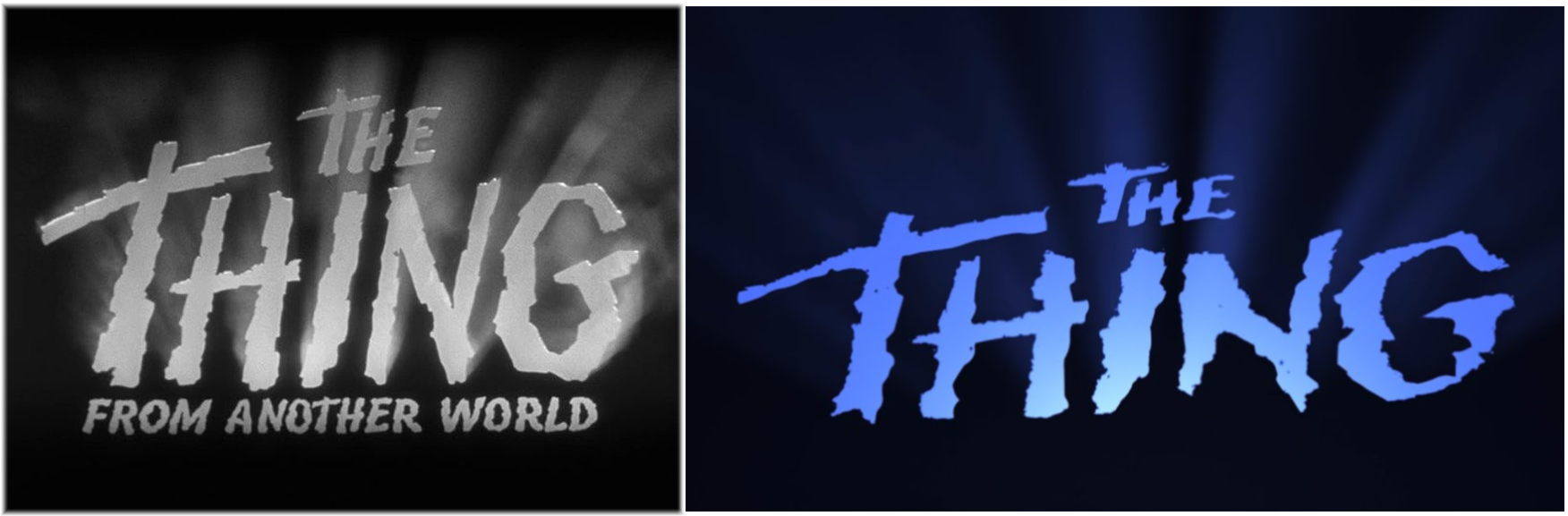
Forty-four years later, the patient is on Dr. Frame's table. Not because it needs saving. Because it deserves to be understood. What follows is not a review. There is no star rating, no thumbs pointed in any direction. This is a full forensic examination, organ by organ, discipline by discipline: the cinematography that lied to your face, the practical effects that nearly killed the man who built them, the score that was rejected and then won an Oscar, and the six weeks of production limbo that turned a good film into an immortal one. Scrub in.
Clinical Chart.
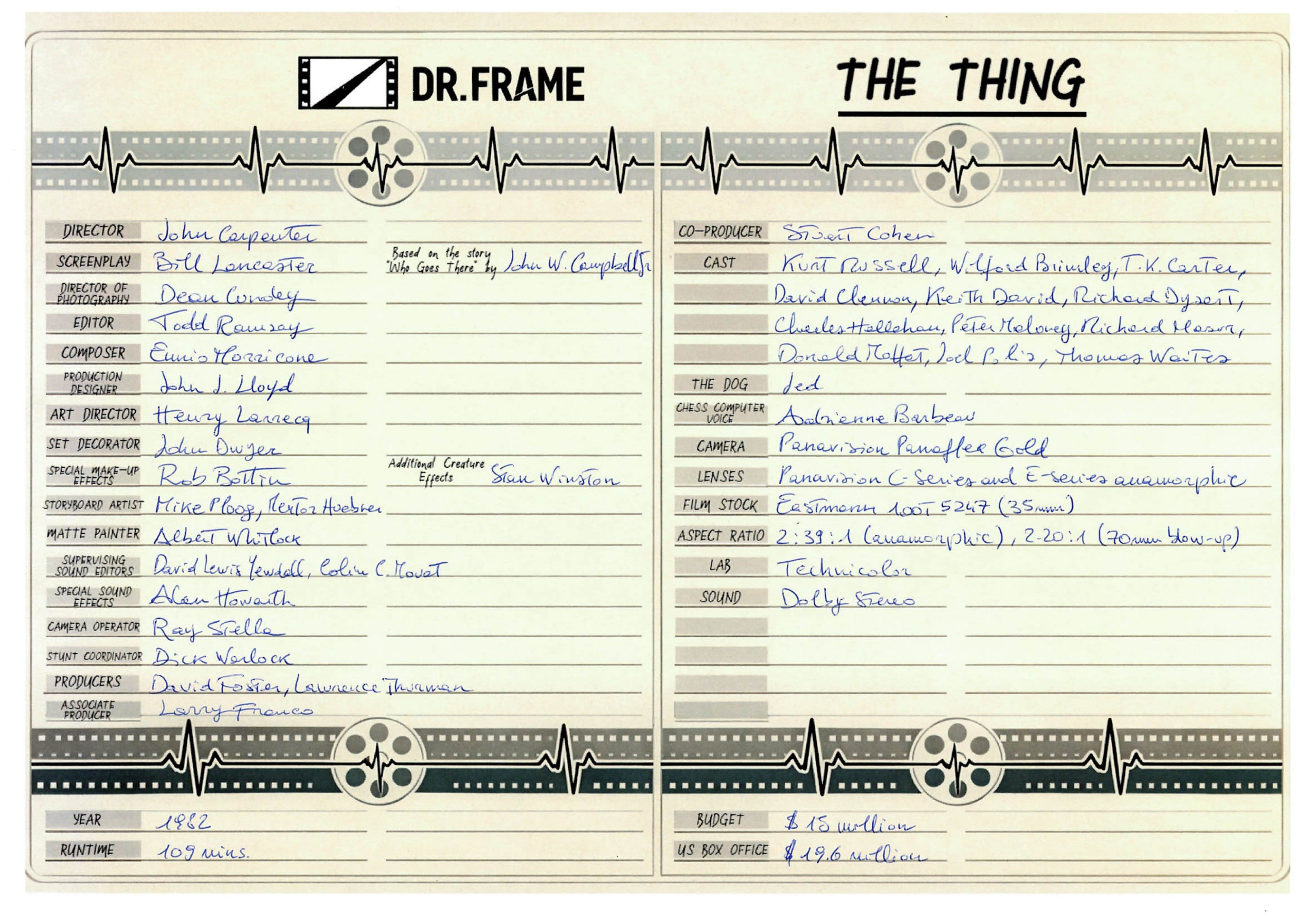
What’s on the table.
Director’s vital signs - The direction
The bodies on the table - The acting
Prosthetic ward - The visual effects
Wardrobe & makeup lab - Costumes and makeup
Operating room - The production
This examination is long. If you are reading on a phone, the Substack app will make it easier.

~90 min read. Settle in.
Patient’s history. The plot.
Antarctica, winter 1982. Twelve American researchers at a remote scientific outpost take in a sled dog fleeing a Norwegian helicopter. The Norwegians are dead before they can explain why they were trying to kill it. What emerges from the dog that night will test every assumption these men hold about the world, about each other, and about the boundaries of their own bodies. John Carpenter’s film strips the creature feature down to its most primal question: if the enemy can become anyone, then trust itself is the first casualty. What follows is 109 minutes of escalating paranoia with no safety net and no guaranteed survivors. For those who have not yet seen the film, consider this your only warning: the examination ahead holds nothing back.
Genetic code. The screenplay.
Every organism begins with its DNA, and the DNA of The Thing was written by a man most people have never heard of. Bill Lancaster, son of Burt, contracted polio as a child. One leg shorter than the other. He played baseball anyway, parked at first base where the condition was least likely to kill him. His first screenplay, The Bad News Bears (1976), was a foul-mouthed little miracle about losing with dignity, and it earned him a Writers Guild Award. His second was The Thing. A children's baseball comedy and the bleakest alien horror film ever made, back to back, from the same hand. Wildly different patients, identical surgical technique: both are ensemble pieces where the dialogue sounds improvised but lands with the precision of a bone saw. Lancaster died on January 4, 1997, forty-nine years old. He never saw the film crawl out of its grave. Two essential credits, then silence. If you want to understand why screenwriters drink, start there.
Lancaster first met the producers in 1977. David Foster and Lawrence Turman had acquired the rights to John W. Campbell's 1938 novella Who Goes There? and were looking for a writer. Several had already tried, including Nigel Kneale and Richard Matheson. They all wanted to open the story up, make it bigger. Lancaster walked into the room, got the impression they wanted a straight remake of the 1951 Howard Hawks version, and walked back out. He had no interest in replicating another man's work. The project sat idle until Carpenter came aboard and Lancaster returned with a different pitch: keep it small, keep it sealed, let the paranoia do the killing. Carpenter heard him out and knew immediately. "It was only when Bill Lancaster talked about what he would do with the short story that I thought, 'This is the guy.'" Lancaster delivered the first thirty pages. They were essentially the first thirty minutes of the finished film, almost unchanged. Then came the second act, and the struggling began. Carpenter and Lancaster drove up to Northern California for a weekend to talk it through, just the two of them, the first screenwriter Carpenter had ever worked with who was not a personal friend. Lancaster finished the draft. Everyone agreed it worked. And then the production machine took hold of it, and the screenplay that emerged on the other side of filming barely resembled the one Lancaster had turned in.
The source material had already been through one mutation before Lancaster touched it. Campbell's Who Goes There? appeared in Astounding Science Fiction in 1938, two years after H.P. Lovecraft's At the Mountains of Madness ran in the same magazine. The family resemblance is impossible to miss: an Antarctic expedition, ancient remains that refuse to stay dead, explorers who crack open the ice and find something that should have been left frozen for eternity. Whether Campbell consciously borrowed from Lovecraft or simply breathed the same literary air is a question scholars still enjoy arguing about at conferences. What matters for our purposes is that Lancaster chose to follow Campbell's story back toward its darker, Lovecraftian roots. In Campbell's novella, the research team wins. They identify the fourteen duplicates, destroy them all, and the narrator thanks divine providence for the outcome. Order restored. Humanity triumphant. Lancaster read that ending and performed one of the most important amputations in the history of the screenplay: he cut the victory. No providence. No restored order. No certainty that anything the characters did made the slightest difference. The optimism of Campbell's pulp-era science fiction bled out on the operating table, and what was left on the page was something colder and far more profound.
Bill Lancaster’s screenplay and John Carpenter’s finished film tell the same story in two completely different languages. Understanding the gap between them is not an exercise in spotting changes.
Lancaster wrote a film about men. The creature is almost beside the point: a catalyst, a pressure applied to a sealed container until the container breaks. His horror is social. It lives in dialogue, in silence between lines, in the slow disintegration of trust among twelve people who have nowhere to go. When Lancaster sends MacReady, Childs, and Bennings out onto the open ice to hunt the escaped dogs (a sequence that does not exist in the finished film) he is writing an adventure, a chase, a story that breathes outside. When he has the Thing drag Bennings underground through the ice, it is spectacle serving character: we lose Bennings out in the open, surrounded by whiteness, which is its own kind of horror. Lancaster’s Antarctica is vast. His men move through it.
Lancaster’s biggest surgical challenge was not the ending. It was the body of the thing. Campbell’s novella runs on conversation. Characters talk, suspect, accuse, theorize. It works on the page because prose can live inside a character’s head. Film cannot. Lancaster had a creature whose real weapon is invisible: it replaces you from the inside, silently, and no one can tell. How do you put that on screen without turning the whole film into men sitting in rooms arguing about who is who? His solution was to build a parallel. Every time the creature physically tears through a body on camera, it is showing the audience what is simultaneously happening to the group’s trust off camera. The kennel scene is not really about dogs being consumed. It is about the first visible proof that nothing inside these walls is what it appears to be. From that point forward, every conversation between the men carries the weight of what the audience has just watched happen to those animals. The spectacle does the work that dialogue alone could not: it makes paranoia visible, tangible, and impossible to forget.
Carpenter read the screenplay and made one decision that changed everything: he closed the door. Every time Lancaster opened the film to the outside world, Carpenter pulled it back inside. The result is a film that takes place almost entirely within a shrinking maze of corridors, where the walls are always too close and the only way out leads to fifty-below temperatures and certain death. The compression of space is not a production choice. It is the film’s central argument. You cannot trust anyone and you cannot leave. Lancaster had written the premise. Carpenter built the trap.
This collision between two visions of horror produces the film’s most famous sequence, and it was not written by either of them. When Rob Bottin arrived on set, Lancaster’s screenplay described the kennel transformation in darkness and sound: the shadow on the wall, the screeching, the impossibility of seeing clearly. Bottin read that page and answered it in latex. The Norris chest defibrillation sequence, with its ribcage opening like a mouth and biting off Dr. Copper’s arms, exists nowhere in the script. The spider-head (Norris’s decapitated head growing spider legs and scuttling across the floor while the men search for it) is not described anywhere in Lancaster’s pages. These are Bottin’s sentences, written in silicone and hydraulic fluid, inserted into a Lancaster paragraph.
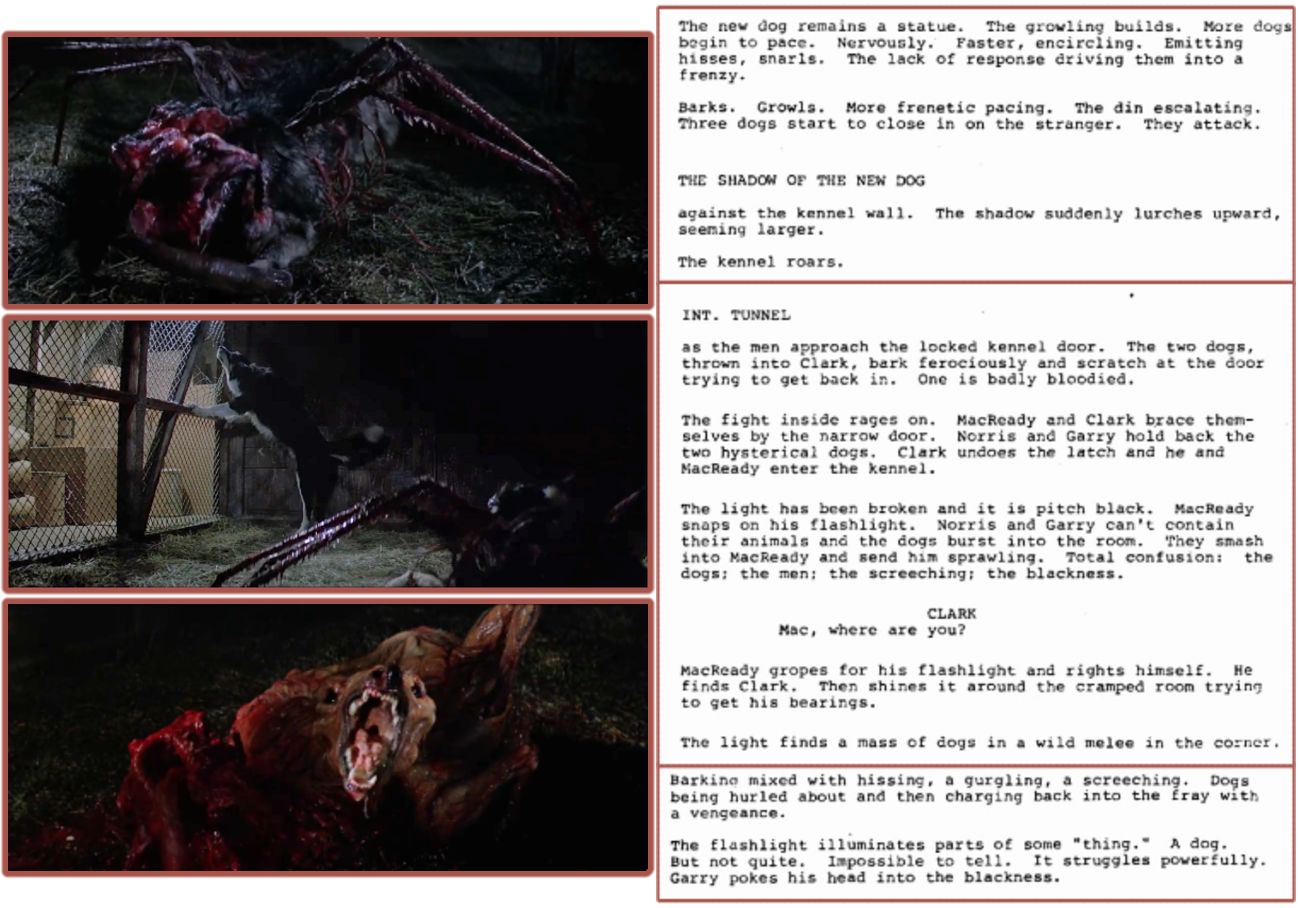
What emerges from this three-way collision - Lancaster’s paranoia, Carpenter’s claustrophobia, Bottin’s biological fury - is something none of them could have built alone. Lancaster gave the film its structure: twelve men, one container, the slow disintegration of trust. Carpenter gave it its architecture: the inescapable corridor, the door that never quite leads outside. Bottin gave it its body: the thing on the table that refuses to stay dead, refuses to stay still, refuses to be the shape you expected. The kennel was not the exception. It was the pattern.
Nowhere is this clearer than in the blood test. Lancaster conceived of a serum test: clinical, medical, a procedure a doctor would recognize. Mix the suspect’s blood with uncontaminated human blood; wait for the reaction. It is the right idea for a film about biology and imitation. But Carpenter replaced it with something more terrifying and more precise: a hot wire applied to individual blood samples, and the blood runs. Not reacts: runs. Flees the heat. Acts on its own survival instinct, independently of the body it came from. Lancaster wrote the concept. Carpenter wrote the meaning. The blood test in the finished film is not a detection method. It is a demonstration, in miniature, of the film’s most unbearable idea: that the Thing’s drive to survive operates at the cellular level, below consciousness, below intention, below anything human reasoning can anticipate or control.
Zoom out from the kennel and the same collision happens many other times on the table. Lay Lancaster's screenplay next to the finished film and you will find the same skeleton, the same nervous system, but several organs have been swapped out, removed, or rerouted entirely. MacReady, on the page, keeps a blow-up doll named Esperanza in his quarters. Carpenter cut her. Good riddance. On the page, MacReady is a chess obsessive, a man whose tactical mind is carefully established before it becomes useful. Carpenter stripped this back to a single scene and one dead computer, which was the right call: you do not want the audience to feel safe in the hands of a strategist. You want them stuck with a helicopter pilot who is making it up as he goes. The jukebox was supposed to play Warren Zevon's "Werewolves of London." It now plays Stevie Wonder's "Superstition." Read that title again and tell me it is not a better diagnosis of where this story is headed. A character named Sanchez, the radio operator, never made it to the screen. His DNA was absorbed by Windows. Then there are the deaths. In Lancaster's draft, Fuchs gets stalked through the corridors and stabbed. A giallo kill: human hands doing human violence. Carpenter cut it out and replaced it with something no scalpel could explain. And the most radical excision of all: Lancaster wrote a death for Nauls so brutal it might have earned the film an X rating. He slashes his own throat rather than let the creature take him. In the finished film, Nauls walks into the dark and simply ceases to exist. No farewell, no body, no closure. Carpenter understood something most horror directors miss: the death you show is the death the audience processes and files away. The death you refuse to show is the one that follows them home.
The screenplay's most prophetic scene is also one of its earliest. MacReady sits alone in his shack, playing chess against a computer. The machine beats him. MacReady studies the board for a moment, then pours his whisky into the circuitry. Smoke, sparks, silence. "Cheating bitch." It is a character introduction that doubles as a spoiler for the entire film, hidden in plain sight. This is a man who, when faced with an opponent he cannot outthink, would rather burn the whole game down than concede. Eighty pages later, he does exactly that to Outpost 31. The destroyed camp at the end of the film is the chess computer writ large: a smoldering ruin that says nothing about who won, only about who refused to lose. Lancaster planted this rhyme in his second draft and Carpenter had the good sense to leave it untouched, though he trimmed nearly everything else around it. Some diagnoses are correct the first time.
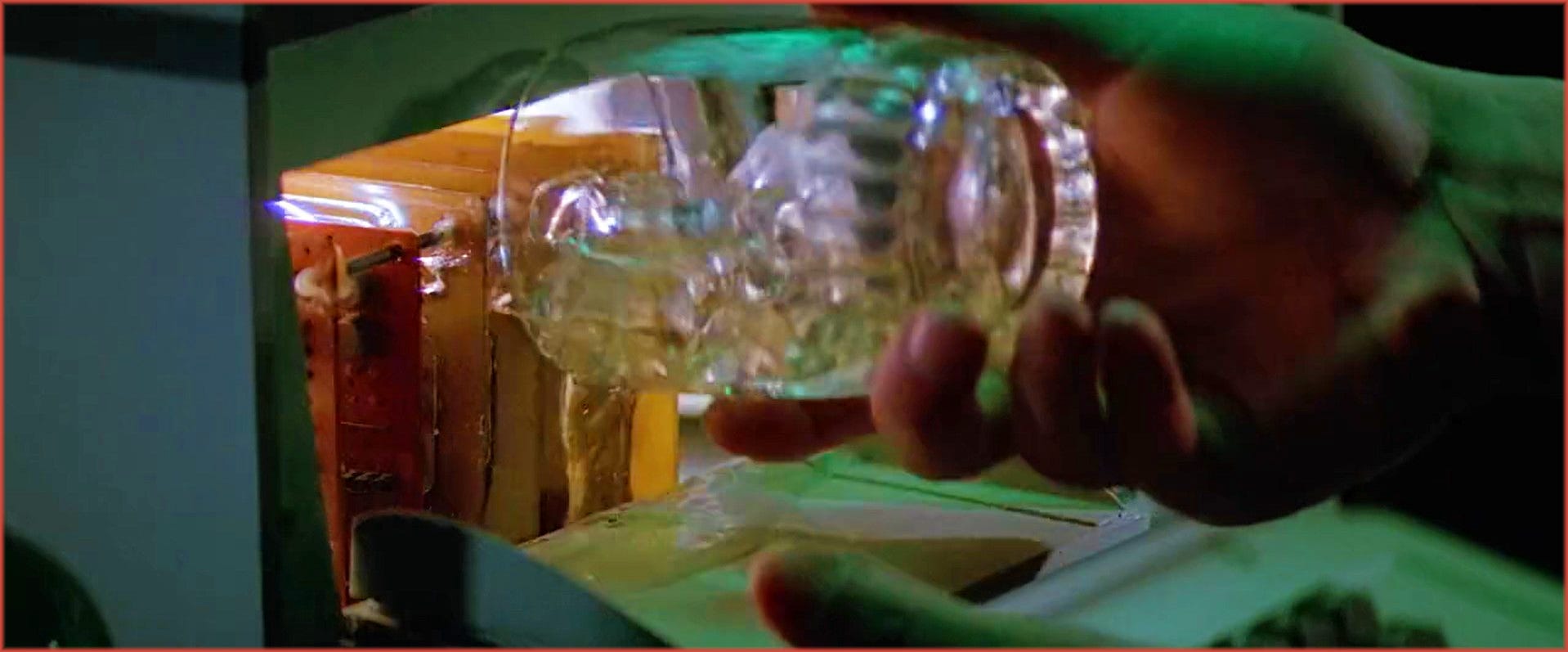
Lancaster was also a master of infection at the sentence level. Pay attention to the dialogue in the second half of the screenplay and you will notice a virus spreading through it. The characters stop talking about the creature and start asking variations of the same question, over and over, with mounting desperation: "Where were you?" "Where's Garry?" "MacReady, that you?" "Where's Sanchez?" "Who is that?" "Anybody see Fuchs... or hear him?" In a span of four pages, Lancaster stacks ten identity questions on top of each other like rising fever readings on a chart. Nobody is making statements anymore. Nobody is sure of anything enough to declare it. The screenplay's grammar itself becomes infected: indicative mood gives way to interrogative, certainty dissolves into questioning, and by the time MacReady sits everyone down for the blood test, the audience has been so thoroughly primed by this accumulation of doubt that the scene does not need to explain its own logic. You already feel it in your syntax.
And then there is the matter of how to kill the patient. Lancaster wrote three endings, each one darker than the last, and Carpenter rejected two of them. In Lancaster's original draft, both MacReady and Childs are Things by the final page. Spring arrives, a rescue helicopter lands, and out they walk, smiling, asking for directions to a hot meal. The apocalypse disguised as a happy ending. Carpenter read it and called it "too glib." He was right, but for reasons Lancaster might not have intended: the problem is not that it is dark, it is that it is clever. It lets the audience feel smart instead of sick. Exit one. The second ending was also shot and tested: MacReady is rescued, tested, confirmed human. Relieved music. Credits. Carpenter filmed it because you film your editor's suggestions when your editor is the one keeping you sane. Then he threw it away. Exit two. What survived is the version that refuses to give you anything at all. MacReady and Childs sit in the wreckage. The fire is dying. One of them might not be human. Neither of them has the energy to find out. "Why don't we just wait here for a little while. See what happens." Two test screenings ran simultaneously at Universal, one with each ending. The audience preferred the ambiguous version. Stuart Cohen agreed: a gentle landing would betray everything that made the film worth crashing for.
Director's vital signs. John Carpenter’s direction.
By the time The Thing landed on his desk, John Carpenter had never directed someone else's screenplay. He had written or co-written every one of his features, scored most of them himself, and operated within a tight circle of collaborators who functioned less like a crew and more like a band. Debra Hill, his co-writer and producer since Halloween, was gone from this project. The synthesizer was handed to Ennio Morricone. The script belonged to a man Carpenter had met in a conference room, not over beers. Everything that had defined his method up to this point was stripped away, and what remained was the one thing that could not be delegated: the eye behind the camera and the instinct for where to point it. If the previous films were Carpenter playing every instrument in the room, The Thing was the first time he walked into someone else's operating theater, picked up an unfamiliar set of tools, and performed the surgery of his career.
Carpenter has spent decades being asked what his films are "about," and his answer usually was the same. Forces of chaos. That is the diagnosis he keeps returning to, film after film, with the consistency of a chronic condition. In Assault on Precinct 13, a police station is besieged by a street gang that has no demands and no motivation beyond annihilation. In Halloween, a man in a mask picks a street, picks a house, picks a girl. No reason. No backstory worth believing. In The Fog, the threat literally rolls in off the ocean, formless and indifferent. Carpenter does not believe the universe has a plan for you. He believes the universe does not know you are there, and that this is considerably worse. The Thing is the purest expression of this worldview because the creature is chaos given a body, or rather, given everybody's body. The men of Outpost 31 did not provoke it. They did not dig it up. They did not fly too close to the sun. They were playing cards and drinking coffee and it walked through the door wearing a dog. Carpenter once put it plainly enough to qualify as a philosophical position: "Life is really about chaos and it's not being directed. It's aimless, it's by chance." If you want a horror film where the monster has a weakness, a motive, and a killable body, there are thousands to choose from. If you want one that operates the way the universe actually does, there is this.
Every director has a type. Hawks had his professionals, men who earn respect by being excellent at one specific thing and shut up about the rest. Ford had his loners on horseback against the skyline, men who belonged to a dying frontier and refused to leave it. Carpenter has what we might call the homo carpenterianus: a competent, cynical, deeply tired man who does not want to be in charge but will absolutely take the wheel when the current driver starts swerving into oncoming traffic. Snake Plissken is this archetype at its most theatrical, all eyepatch and snarl. Napoleon Wilson is the criminal variation. Nick Castle in The Fog is the blue-collar edition. MacReady is the definitive model, stripped of Plissken's action-figure posturing and grounded in something uncomfortably real. He is a helicopter pilot who drinks too much, lives in a shack away from everyone else by choice, and does not once in the entire film deliver a speech about saving humanity. When Garry, the station commander, buckles and offers leadership to the group's senior scientist, Norris quietly declines. So the drunk loner with the flamethrower gets the job. Not because he is the best man for it. Because he is the last man willing to do it.
Before a single frame was shot, Carpenter made a decision that most audiences never consciously notice and that shaped every scene in the film. He chose to shoot in anamorphic widescreen at an aspect ratio of 2.39:1. This is not an unusual format: it is the standard for epic filmmaking, for desert vistas and battlefield panoramas. What is unusual is the reason Carpenter chose it here, in a film set almost entirely in cramped corridors and small rooms. The anamorphic frame is wide. Wide enough to hold six faces simultaneously without losing any of them to the edge. In a film where the central dramatic question is which one of these men is not a man, keeping every face in frame at all times is not a compositional preference. It is a form of evidence gathering. The camera becomes a surveillance instrument, and the audience becomes the analyst. When MacReady addresses the group, Carpenter does not cut to individual reaction shots the way most directors would. He holds the wide frame and lets you scan. You are looking for the tell, the slight delay, the wrong expression. You never find it. The format was chosen so that you would never stop looking.
Now, here is something most people miss entirely because there is no horse in it. The Thing is a Western. Not metaphorically, not loosely, not “if you squint.” It is a Western in the way Assault on Precinct 13 is a Western, which is to say Carpenter himself calls it a Western. He has never used those exact words for The Thing, but everything on screen says them for him. Look at the evidence. Those sweeping anamorphic vistas of the Antarctic desert against the mountain range: that is John Ford shooting Monument Valley, except the valley is made of ice and John Wayne has been replaced by an unwashed beard and a bottle of J&B. The siege narrative is Rio Bravo relocated to the South Pole. The group dynamic is pure Hawks, except Hawks’s men pull together when the bullets fly and Carpenter’s men pull guns on each other. And the Cowboys-and-Indians structure is right there if you know where to look: the “settlers” of Outpost 31 defending their tiny outpost of civilization against the indigenous population, a creature that has been living in this territory for a hundred thousand years before any of them showed up. Carpenter even takes the Western’s traditional elimination of women and runs it to its logical endpoint. There are no women in this film. Zero. The only female voice belongs to a chess computer, and MacReady murders it with whisky in the first five minutes. The frontier is closed in every possible sense.
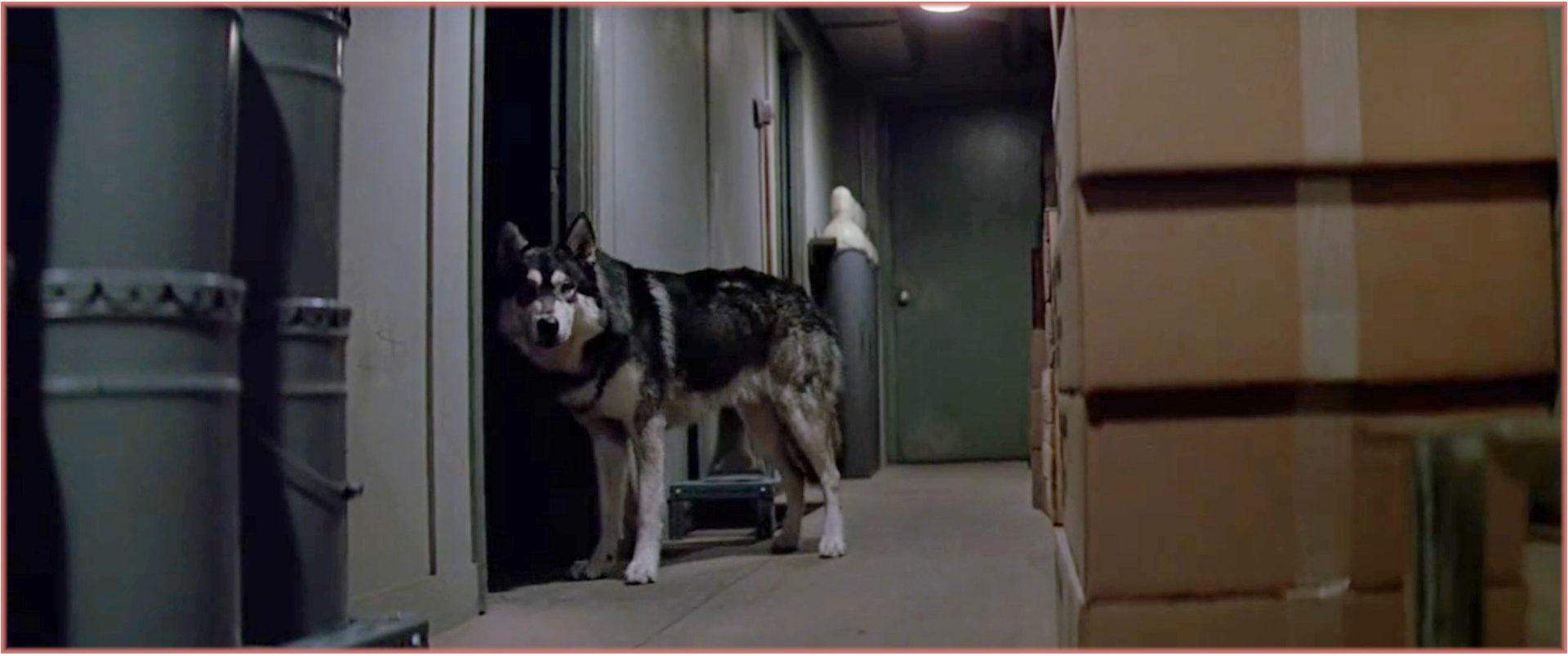
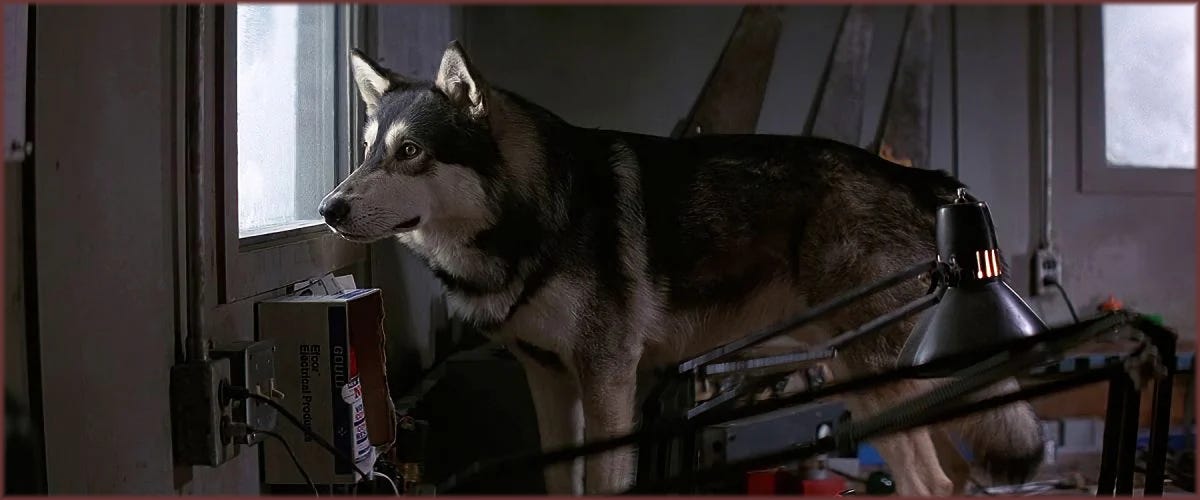
Most horror directors give you a monster and then hide it. Carpenter did something far more sadistic: he hid the monster inside the people you are already looking at. And then he made the camera lie about which ones. This is not standard dramatic irony, where the audience knows the killer is behind the door and the character does not. Carpenter operates on what has been called "dramatic suspicion": the camera moves slowly toward a face, lingers a beat too long on a corridor, frames an empty doorway as though something has just left it, and you feel a threat that has no evidence behind it. You suspect because the camera is telling you to suspect, and the camera has no intention of confirming whether it was right. The dog in the early scenes is the purest demonstration. Watch Jed, the half-wolf hybrid who played the role, walk through the compound. He never barks. He never wags his tail. He simply looks at people with a calm, studying gaze that makes your skin crawl. Carpenter and Cundey amplify it with deliberate slow camera moves timed to the dog's own stillness, a technique Cundey has described as taking advantage of the animal's ability to move slowly and stare in a piercing way. The result is a dog that appears to be shopping for its next body. Nobody on the crew knew what the creatures would look like. Carpenter kept the designs sealed. When the actors saw Bottin's creations for the first time, they saw them on camera, under the lights, in the moment. Several of those reactions you see on screen are not performances. They are symptoms.
Carpenter built the paranoia into the set before he built it into the script. During production, he made a decision that most directors would consider professionally reckless: he withheld information from his cast. Not logistics, not blocking: information about the story itself. Specifically, he never told the actors with certainty which of their characters were Things and which were not. Some of them suspected. None of them knew. The result is that when you watch the men of Outpost 31 look at each other with suspicion, you are not watching actors performing suspicion. You are watching men who genuinely do not know whether the person across from them has been told something they have not. That is not a subtle distinction. It is the difference between a horror film and a horror experience.
The most important tool in Carpenter's kit on this film was not the flamethrower. It was the cut. Specifically: the cut that arrives one second before you have seen enough. Horror cinema has a long tradition of hiding the monster to preserve its power. Carpenter does something structurally different. He does not hide the Thing: he shows you pieces of it, always slightly less than you need, always at the moment when your brain has begun to assemble a complete picture, and then he takes it away. The kennel sequence ends not on the creature but on the burned remains the following morning. The Bennings transformation happens inside the base, off-screen entirely: we find him already changed, standing in the courtyard, arms deformed, making sounds that are no longer human. What you remember seeing is always slightly more than what was actually shown. Carpenter understood that the imagination, given enough raw material and denied the conclusion, will construct something more horrifying than any practical effect. The off-screen space in this film is not empty. It is where the Thing lives between transformations, and Carpenter never lets you forget it. Every door that closes, every corridor that empties, every character who walks out of frame and does not immediately walk back in, these are not editing choices. They are a map of where the infection might be spreading while you are looking somewhere else.
Carpenter would later place The Thing as the first chapter of what he calls his Apocalypse Trilogy, followed by Prince of Darkness (1987) and In the Mouth of Madness (1994). All three films end with the strong suspicion that humanity has lost. In Prince of Darkness, a dream transmission from the future confirms that the characters have merely postponed the inevitable. In In the Mouth of Madness, Sam Neill watches civilization unravel from a movie theater seat, laughing, completely insane. Read backward from those endings and the final scene of The Thing stops being ambiguous. It is a death certificate that has not yet been signed. But what separates The Thing from its two younger siblings, and from nearly every siege film Carpenter made before it, is a distinction the director himself has pointed out. Assault on Precinct 13 is a siege from outside. The Fog is a siege from outside. The Thing is a siege from within. The walls are intact. The doors are locked. The enemy is already sitting across from you, wearing your colleague's face, and has been for some time. And there is no cure in this film, only containment, and even that fails.
Eye exam. The cinematography.
Dean Cundey shot Halloween in twenty-one days on a budget that would not cover the catering on a studio picture. He shot The Fog largely at night, on location, with fog machines that did whatever they pleased. By the time he walked onto the stages at Universal to begin The Thing, his third consecutive collaboration with Carpenter, he was the kind of cinematographer who could light a broom closet and make it feel like a cathedral, or a coffin, depending on what the scene required. Carpenter trusted him completely, which in practice meant two things: Cundey got to do whatever he wanted with the lights, and in return, every frame had to serve the paranoia. Not illustrate it. Serve it. The distinction matters, because what Cundey built for this film is not a visual style. It is a visual argument. Every choice of lens, every color on screen, every shadow on a ceiling is there to make you distrust what you are seeing. The cinematography of The Thing does not show you a story about paranoia. It makes you a participant.
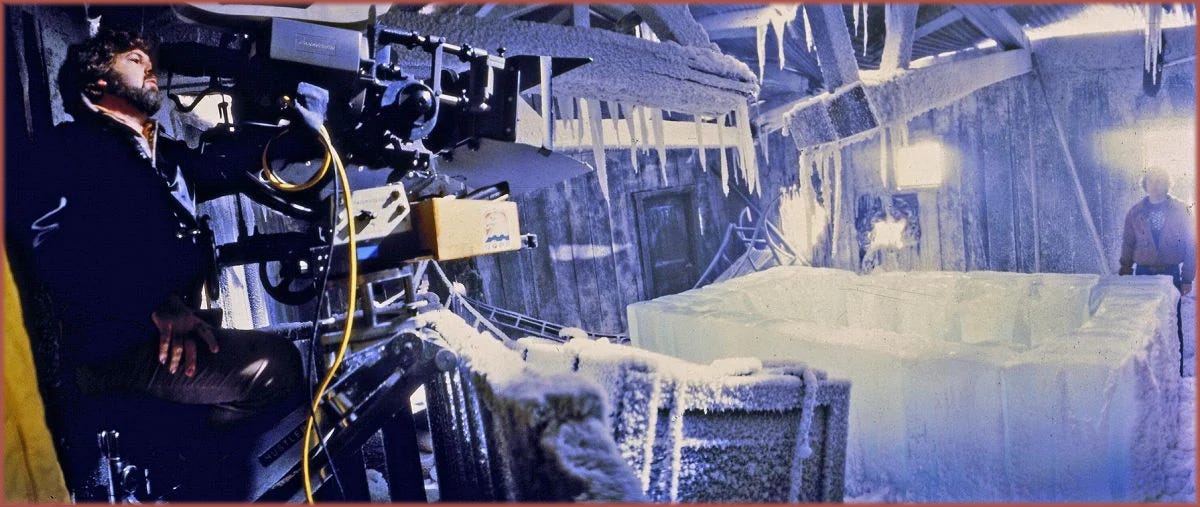
Start with the glass. Cundey shot the film on Panavision C-Series and E-Series anamorphic primes through a Panaflex Gold body. The C-Series had been the industry standard since 1968. Compact, lightweight, with a pronounced anamorphic flare and a graduated depth of field that gives close subjects a weight and presence that spherical lenses simply cannot replicate. The E-Series, introduced in the early 1980s, offered cleaner optical performance and fewer aberrations while retaining the essential anamorphic character: the elliptical bokeh, the blue horizontal streak across any bright light source. Cundey used both series on the same film, which means the flares you see crossing the frame when a road flare or a flashlight catches the lens are not accidents. They are the optical signature of the glass, light behaving exactly as physics demands when it hits an anamorphic element at the wrong angle. On a spherical lens, you correct for that. On a C-Series, you point the camera directly at the flame and let it happen. Every streak of blue light across a face in this film is the lens telling you something is burning nearby. Cundey knew this. He chose the glass accordingly.
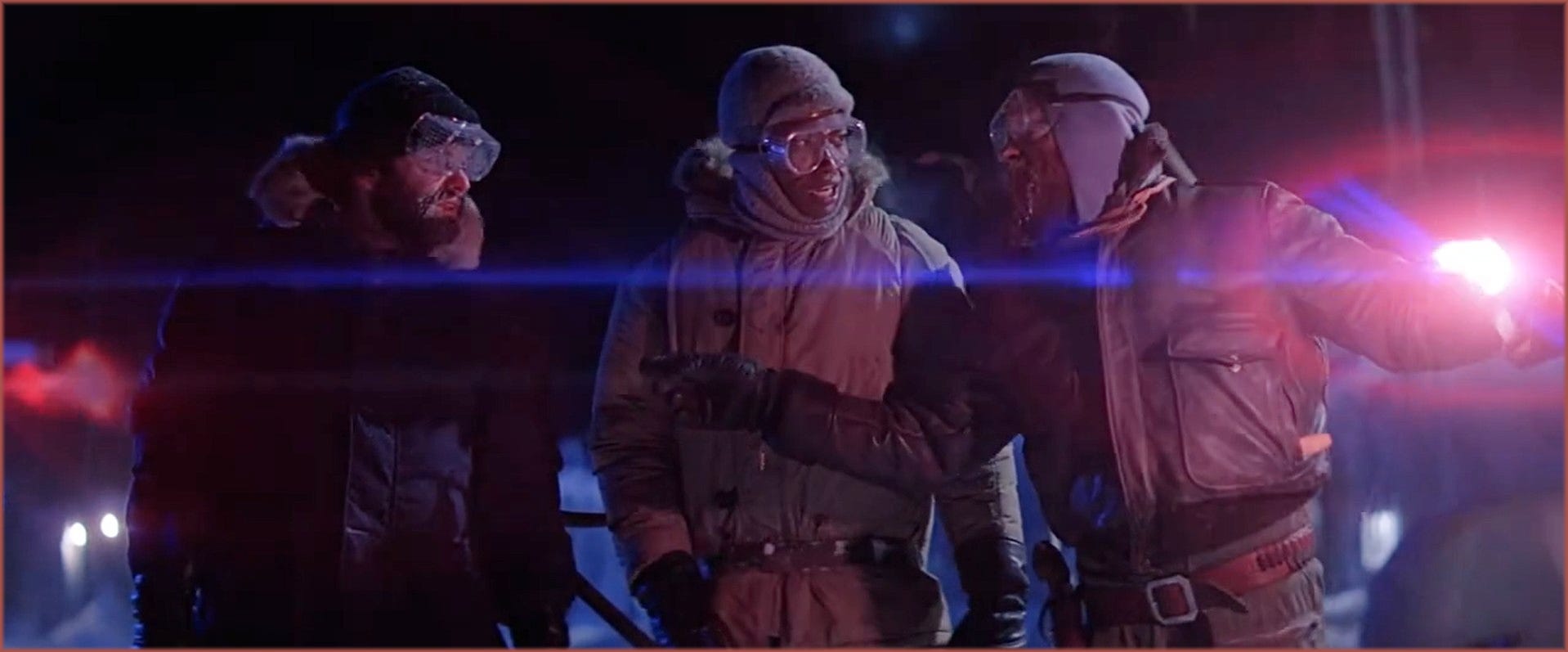
Carpenter and Cundey wanted to shoot the film in black and white. Universal killed the idea: no television network would buy a monochrome film for broadcast. So Cundey did what a great DP does when someone takes away his first choice. He found a way to control color entirely through light. The logic is worth spelling out, because it is the logic of a DP who has just been told no. In black and white, contrast does all the emotional work automatically: light separates from shadow, known from unknown, safe from dangerous, without any intervention from the color spectrum. In color, you have to build that separation manually, with sources. Which means losing the monochrome option was not a setback. It was an instruction: build your own black and white, but do it in color. He needed a neutral world, a blank canvas where nothing has color until his light decides it does. Every tone you see on screen exists because Cundey's light bring it to life. The production design gave him the neutral canvas. What he painted on it was his. The warm amber of the tungsten practicals inside the base, the cold cobalt of the exteriors, the violent magenta of a road flare held by a terrified man: none of these exist in the set itself. They exist only in the light that Cundey throws onto it. He turned the entire film into a chromatic argument between warmth and cold, between the known and the unknown. And when the Thing finally tears itself open on screen, it bleeds reds and yellows and pinks into a world that has been deliberately drained of them. The parasite is the most colorful thing in the frame. Cundey made sure of that by making sure nothing else was allowed to compete.
Cundey built the film's visual world on a war between two temperatures of light, and he fought it with real physics. The interiors of Outpost 31 are lit almost entirely with tungsten practicals, the bulbs you would actually find in a research station, running at roughly 3200 Kelvin. They cast a warm amber glow that reads as shelter, as human presence, as the last trace of civilization at the bottom of the world. Step outside and the color temperature jumps to the opposite end of the spectrum. Cundey installed genuine airport runway lights around the compound perimeter, industrial fixtures with deep blue glass housings that burn somewhere north of 10,000 Kelvin. The effect on screen is visceral: every time a door opens, the blue invades the amber. The unknown bleeds into the known. You do not need dialogue to understand that outside is death. The light tells you. Between these two poles, Carpenter introduced a third color: the magenta of road flares. He chose road flares over conventional torches specifically for that color, a hot pink-red that belongs to neither the warm interior world nor the cold exterior one. Magenta is the color of human action, of men fighting back with the only weapon the film ultimately trusts: fire. Three temperatures, three meanings. Warm amber, cold blue, desperate magenta. The film tells you who is losing the war before anyone speaks a word.
Under the lens: the physics of fear
Cundey's three-temperature lighting system is not a stylistic choice. It is applied physics in the service of storytelling. Tungsten practicals at ~3200K read as warm amber on Eastman 5247 stock. The release prints were struck on Eastman 5384, a print stock chosen for its deep blacks and controlled saturation, qualities that on a well-calibrated projector would have made Cundey's three-temperature system land exactly as designed. The airport runway lights with blue glass housings push past 10,000K, registering as deep cobalt. Road flares burn at a color temperature that produces their distinctive magenta. These are not post-production grades or filters. They are three real sources of electromagnetic radiation at three different wavelengths, captured on a single photochemical emulsion and interacting with each other in real space, in real time. When a door opens and the blue light spills into the amber room, the film is recording an actual collision of two thermal realities on a single strip of celluloid. Digital color grading can simulate this. It cannot replicate the way light from competing sources wraps around a human face when both sources are physically present on set. That is why forty-four years of technological progress have not made this film look dated. You cannot digitally reproduce something that was never digital to begin with.
A ceiling should not matter this much. But Cundey came from location work, not studio stages, and a location DP knows that if the audience cannot see the ceiling, the room feels like a set. If the room feels like a set, the threat feels like fiction. So the ceilings had to be visible, which created a problem: the standard way to light a film set is from above, with rigs and fixtures that live exactly where the ceiling is supposed to be. Cundey's solution was a piece of low-tech engineering that deserves more attention than it gets. He hung china hat lanterns, simple conical shades that push all their light downward, creating controlled pools on the actors below. But that left the ceilings dark, which defeated the purpose. So he ran miniature incandescent bulbs behind the lantern shades, wired to independent dimmers, solely to throw a faint glow upward onto the pipes and ductwork overhead. Two separate lighting systems, one pointing down, one pointing up, operating independently in the same room. The downward light illuminates the actors. The upward light illuminates the architecture that is crushing them. The result is a space where you feel the weight above your head at all times, a ceiling full of intestinal tubing pressing down on men who are trying very hard not to think about what might be happening inside their own bodies.
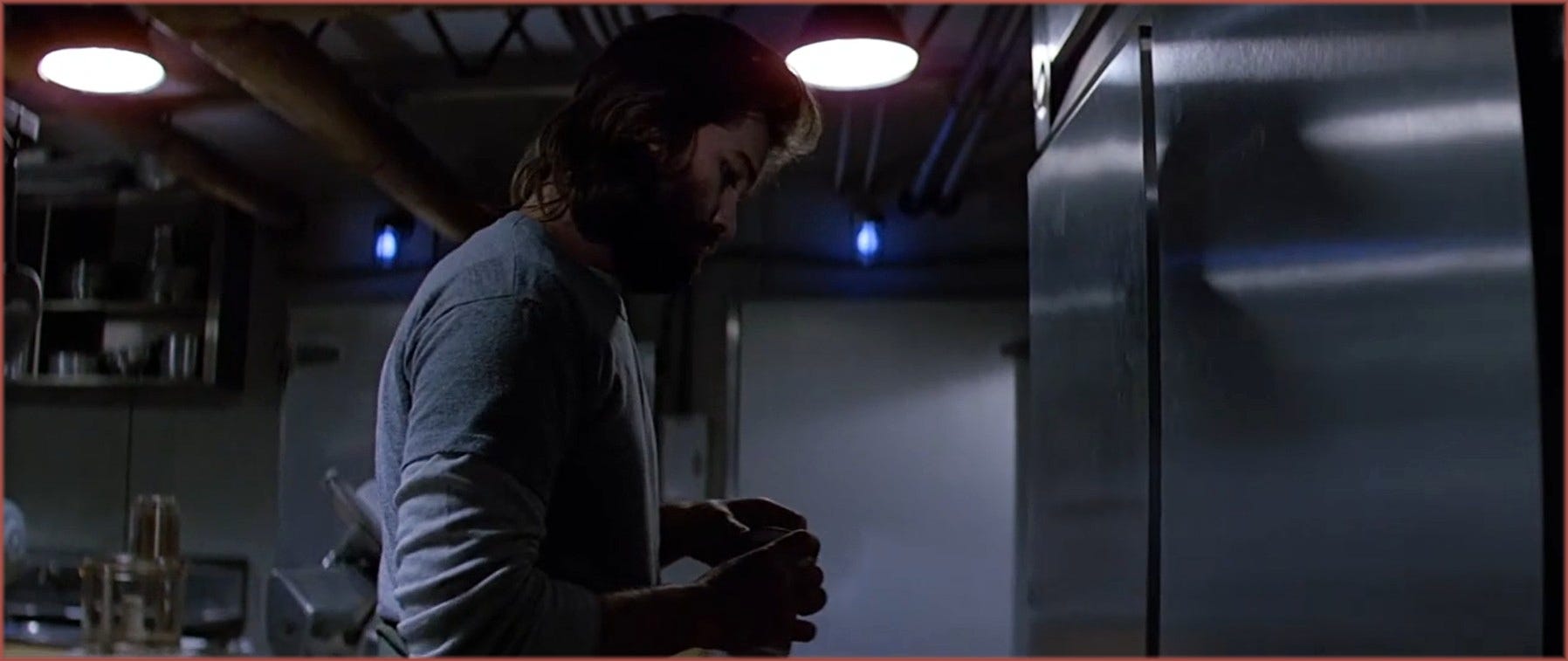
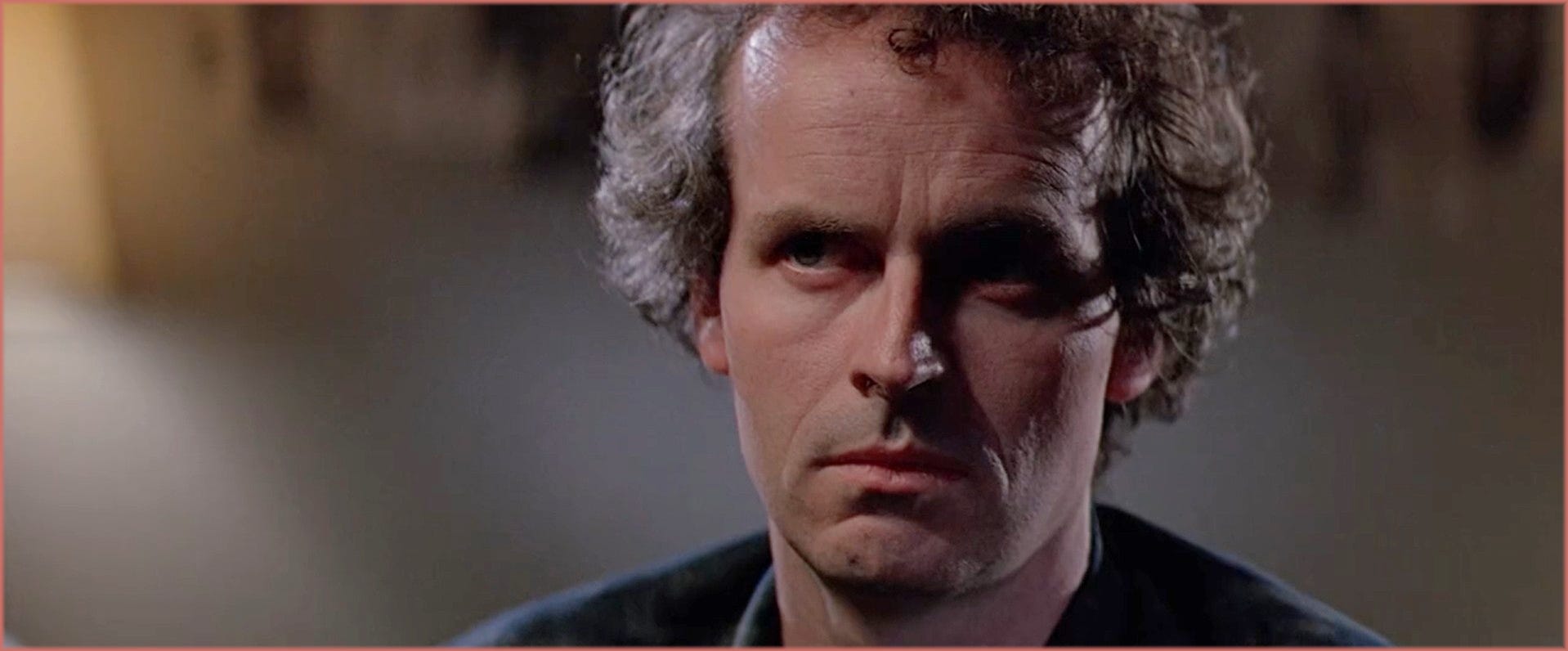
Now we come to the detail that has launched a thousand Reddit threads and will probably launch a thousand more. Cundey has confirmed, in recent public appearances, that the eye light was deliberate. A small, precisely placed light source creating a visible gleam in the pupils of human characters. A symbol of consciousness, of presence, of something still alive behind the face. The idea is elegant and paranoid in equal measure: life, reduced to a single point of reflected light. Remove it, and the face goes flat. The eyes become what Cundey calls "dead eyes." The most specific example he has given is Palmer: in the blood test sequence, before the transformation, look at his eyes. Cundey says he deliberately left them dark. The tell was already there, one scene early, for anyone looking in the right place at the right time. Carpenter, when asked who is the Thing in the final scene, has given a different kind of answer: "I don't know." Not a denial of the technique. A confirmation that the ambiguity was total, even in the director's own mind. Two men, the same set, the same scenes: one hiding information in the light, one genuinely uncertain what the information means. Dr. Frame's position: both answers are correct, and together they are the most honest thing anyone has ever said about this film. Some eyes feel alive. Some do not. Once you see it, you cannot stop looking.
Here is a piece of optical surgery that ninety-nine percent of audiences will never detect, which is exactly how Cundey wanted it. A split diopter is a half-lens that clips onto the front of the primary lens and pulls off a beautiful lie: it lets two different depths exist in perfect focus within the same frame. Close and far, sharp and sharp, at the same time. The problem is the seam. Where the two halves of the lens meet, there is a telltale blur, and if the audience spots it, the trick is dead on the table. Brian De Palma turned the split diopter into an art form in the 1970s, making the double focus visible and theatrical, daring the audience to feel the tension between two planes. Cundey wanted the opposite: he wanted you to feel the tension without knowing where it was coming from. So he hid the surgery in the shadows, where no one could see the stitches. The perpetually low lighting of The Thing swallows the seam whole. Now watch what he does with it. Clark, in the foreground, quietly palms a scalpel. MacReady stands in the midground, gun raised, pointed at Childs and Palmer standing behind him with a rope. Both planes: razor-sharp.
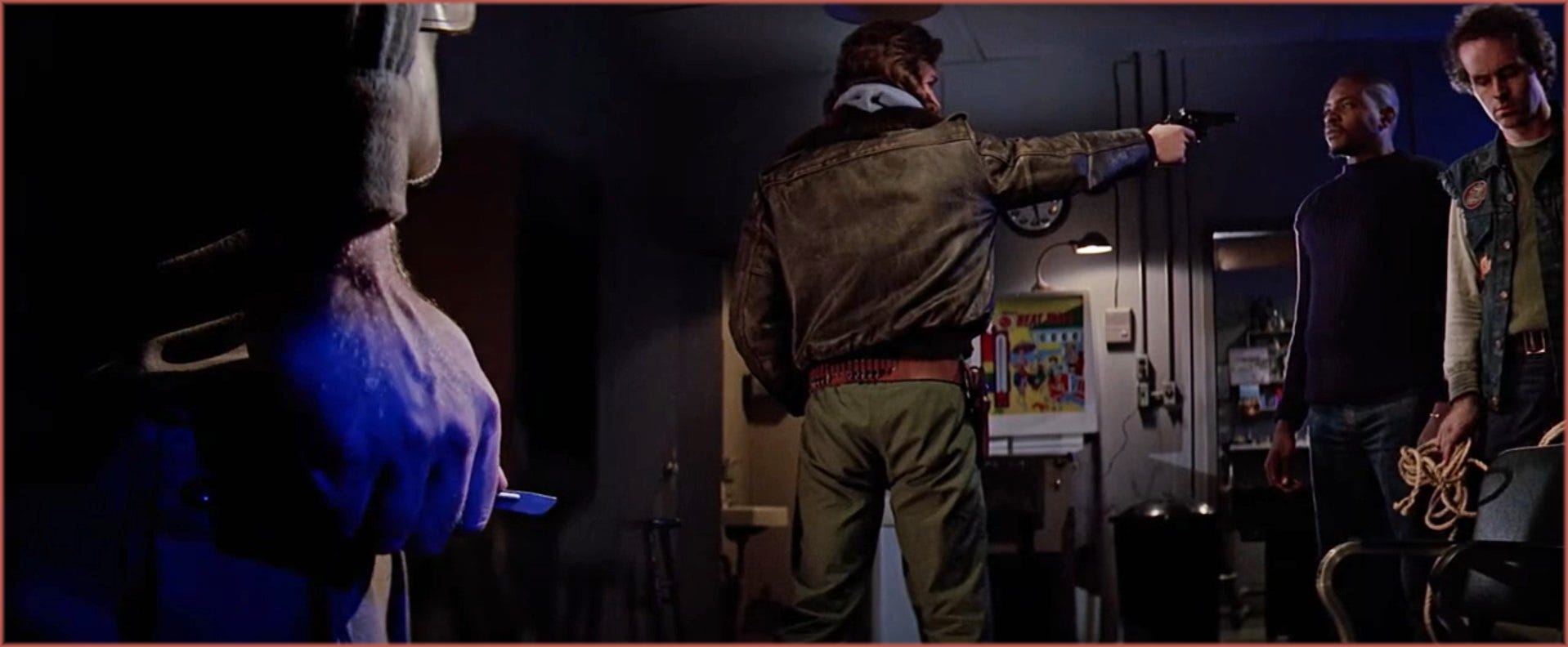
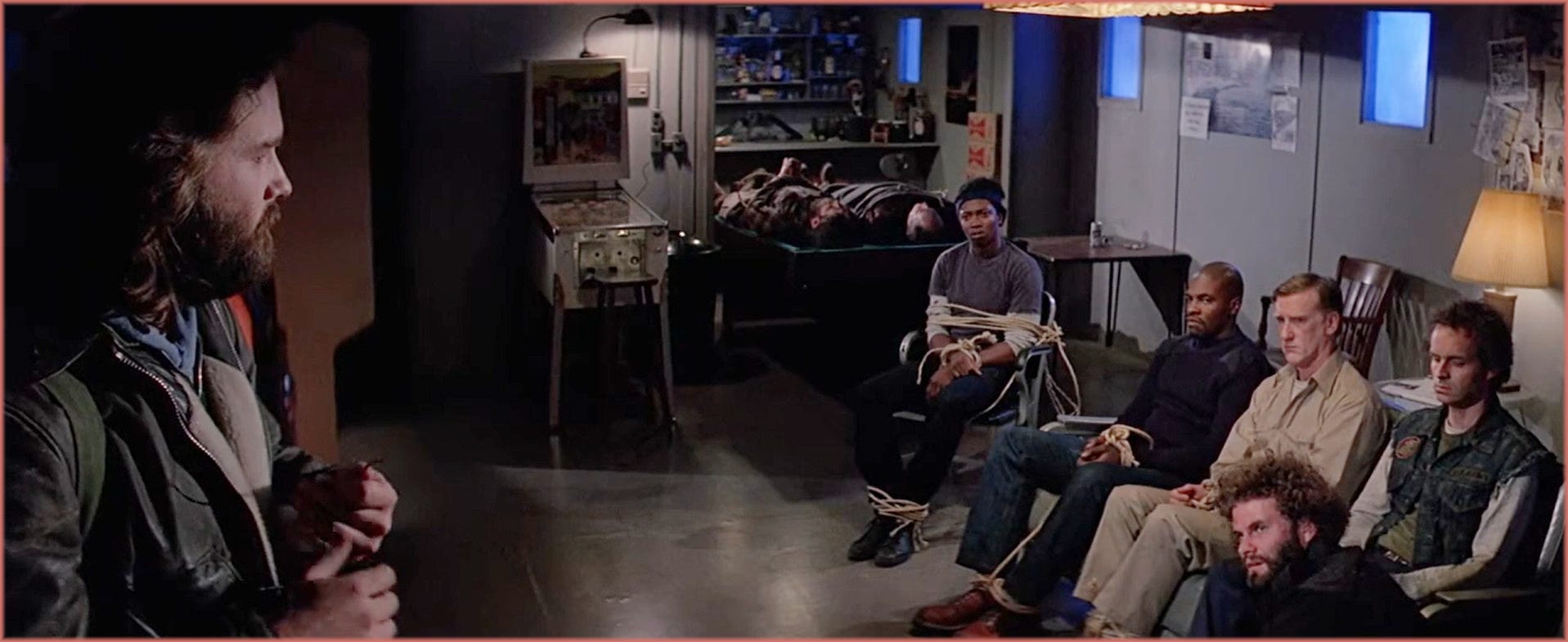
Your eye is being asked to monitor a weapon and a target simultaneously, and the tension lives not in either plane but in the gap between them, in the half-second it would take that scalpel to cross the room. Then comes the blood test - the frame you have already seen above - and Carpenter turns the composition into a verdict. MacReady alone on the extreme left of the frame. Five men tied to furniture on the right. One against five. The same widescreen ratio that spent the whole film trapping these men together now cracks down the middle and separates them.
Many of the film's most harrowing scenes are lit by nothing but what the actors are holding. Road flares, lanterns, flashlights. No studio rigs, no fill lights, no safety net. When MacReady leads the men through the darkened compound with a flare raised above his head, that magenta glow on his face is the actual light source. The lens flares that streak across the frame are not added in post, not filtered, not controlled. They are the raw optical response of the Panavision glass to a naked flame held three feet from the lens. The effect is immediate and almost subliminal: the image stops feeling like a movie and starts feeling like footage. You smell the phosphorus. You feel the heat pushing back against the cold. Cundey understood that when your only light source is something a character is gripping in his fist, the audience stops watching and starts being there. Every flicker becomes a heartbeat. Every shadow behind the flare becomes a question. And if the flare goes out, so does everything you know.
The most delicate negotiation on set was not between actors. It was between the cinematographer and the twenty-one-year-old kid who had built the monsters. Rob Bottin came from Rick Baker's school, where every seam, every paint job, every surface had to be flawless. He was, by all accounts, ferociously protective of his creatures and had strong opinions about how much light they could survive. On The Fog, their previous collaboration, this was simple: the ghosts lived in the fog, which meant they lived in the dark, which meant Bottin could hide anything he needed to hide. The Thing offered no such mercy. Carpenter wanted the transformations lit, visible, in your face. The creatures appear in rec rooms, laboratories, kennels, all of them practical spaces with overhead lighting already established. Cundey had to find the angle of attack that would make latex look like living tissue, rubber look like muscle, and KY Jelly look like something your body actually produces, all without revealing a single mechanical joint or cable. He lit the creatures the way a portrait photographer lights aging skin: carefully, from angles that emphasize texture and conceal structure. For each creature sequence, he and Bottin would identify the space and justify a cluster of very small lights (practical spots, often hidden in the set itself) that could rake across the surface of the creature, catching texture and depth without flooding it. At the same time, he lit the back wall of the set independently, so that the creature's silhouette would read as a defined shape against it. The audience sees enough to understand what is happening. Not enough to see where the latex ends and the mechanism begins. Two separate lighting decisions working simultaneously: one to reveal texture, one to reveal shape, both designed to conceal construction. Violet Lucca, writing for the Arrow Video booklet, puts it best: when Windows kicks the light bulbs in the rec room while being consumed by the Thing, one has to wonder if this was Bottin's request. What those creatures were actually made of, and what building them cost the man who built them, belongs to the Prosthetic ward. We are not there yet.
One last detail for the clinical notes. Cundey ran two separate Panaflex camera bodies throughout the shoot. One lived in the heated stages at Universal. The other lived in the subzero air of Stewart, British Columbia. They never switched. They could not: move a warm camera into freezing air and condensation forms inside the lens and the magazine, fogging the film stock and killing the take. Two bodies, two temperatures, no contact. Even the equipment on this film had a contamination protocol. Camera operator Ray Stella worked both units, and when the blood test scene needed close-up inserts of needles puncturing skin and drawing real blood, Stella rolled up his own sleeve. "I can do it all day," he told Carpenter. So while Bottin's crew was running on no sleep and bleeding ulcers to build creatures that did not exist, the camera operator was quietly bleeding for real, twenty feet away, for a shot that lasts less than two seconds. This is the kind of set where the line between the film and the people making it had stopped existing somewhere around week four.
Heartbeat. The editing.
Todd Ramsay is the least famous person responsible for one of the most precisely constructed horror films ever made. His name appears in the credits for four seconds and then the film begins, and from that point forward his work is invisible in the way that only truly great editing is invisible: you feel it without knowing you feel it.
The film Ramsay first assembled after eight weeks of principal photography was not this film. Carpenter watched the rough cut and identified the problem immediately: the picture died after the kennel sequence and did not come back to life until the Norris transformation. Stuart Cohen would later describe it as “a long time between monsters.” For a film staking its claim as a state-of-the-art creature feature, that gap was fatal. During the six-week hiatus that followed, a scheduling accident that turned into the most productive period of the entire production, Carpenter and Ramsay cut everything that did not directly advance either the threat or the paranoia. Dialogue scenes that established character were shortened or removed. Humorous exchanges between the men went first. The blow-up doll. Childs’ marijuana garden. Gone. What remained was a film that moved like a fever: no recovery time, no breathing room, no moments where the audience could settle back into their seats and feel safe.
This is the editing philosophy that defines The Thing: comfort is the enemy. Every scene that might have allowed the audience to like these men, to relax in their company, was a scene that weakened the ending. You cannot make an audience feel the paranoia of not knowing who to trust if you have spent the previous hour teaching them who to like. Ramsay and Carpenter understood this at the molecular level. The cuts they made were not about pace. They were about epistemology.
The blood test sequence is where this philosophy reaches its surgical peak, and the place where, on your next viewing, you should count the cuts. MacReady alone on the left side of the frame. Five men tied to chairs on the right. The camera moves through the room not as an observer but as an interrogator, close on a face, then the wire, then another face, then the petri dish, then back to the faces. The cuts are not rhythmic in the conventional sense. They are metronomic in the way a heartbeat monitor is metronomic: regular enough to establish a baseline, irregular enough that when the spike comes, you feel it in your chest. When Palmer’s blood jumps, Ramsay holds on it for exactly one beat longer than comfort allows. That extra frame, not even a full second, is where the sequence lives.
Ramsay was also responsible for one of the film’s most debated structural decisions: the fade to black. He used them between sequences as breathing punctuation, a way of telling the audience that time had passed without showing the passage of time. He was mocked for this by some. Carpenter backed him without hesitation. In retrospect, the fades are exactly right: they are the film’s way of acknowledging that things happen in the dark, off screen, in the gaps between what you are allowed to see. The editing style and the subject matter are the same argument.
On the ending, Ramsay’s instinct was protective rather than artistic. He suggested filming an alternate conclusion (MacReady rescued, tested, confirmed human) while Russell was still available. Carpenter shot it. Neither man used it in the test screenings. The nihilistic ending was the only ending the film could survive. Ramsay understood this too, which is why his suggestion was about having options, not about using them.
Auditory scan. The sound.
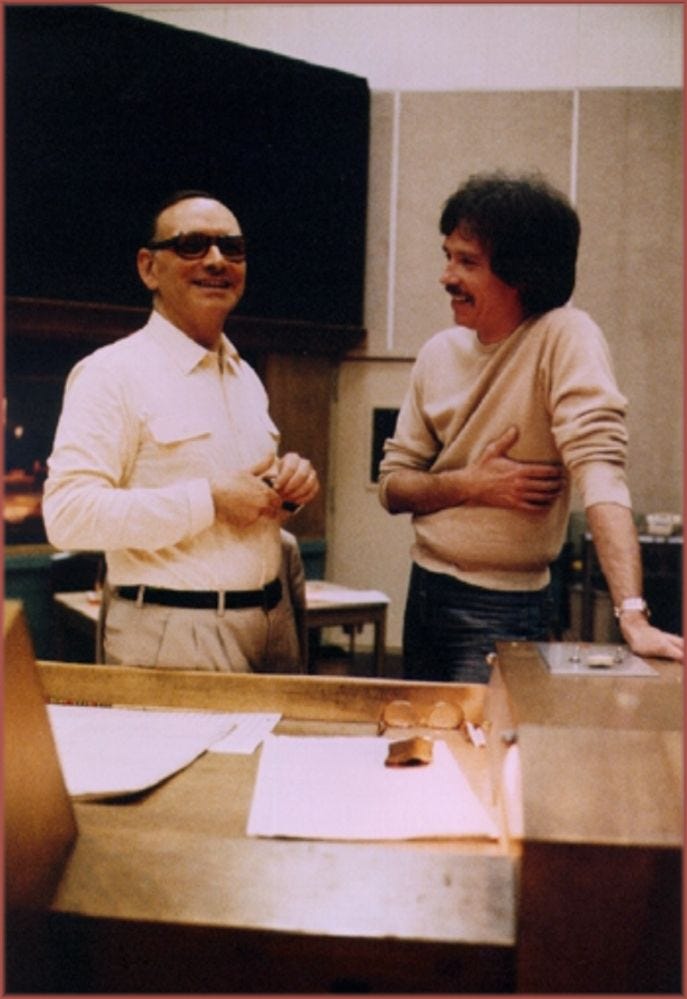
Ennio Morricone had composed for Sergio Leone, Dario Argento, Bernardo Bertolucci. He had written music for films that smelled of dust and blood and moral collapse. He was not a man who needed explaining to. And yet Carpenter flew to Rome in 1981 with a two-day window in Morricone’s schedule and sat down at a piano to approximate, in real time and across a language barrier, what he needed the music to do. Stuart Cohen, who was there, says Morricone understood perfectly. Alan Howarth, who was not, says Carpenter came back feeling that portions of the score were too present, too overt. In Howarth’s words, he needed Morricone to “imitate John Carpenter.” Both accounts are probably true. What Morricone delivered was a full symphonic suite of extraordinary intelligence. What Carpenter used was a drastically edited version of it, with three cues (“Bestiality,” “Eternity,” and “Despair”) cut entirely and replaced by electronic material that Carpenter and Howarth composed themselves. The Razzie committee nominated the result for Worst Original Score in 1982. Thirty-three years later, as we noted in the Admission, those three unused cues ended up in The Hateful Eight. Morricone collected his Oscar at eighty-seven. The patient sometimes outlives the diagnosis.
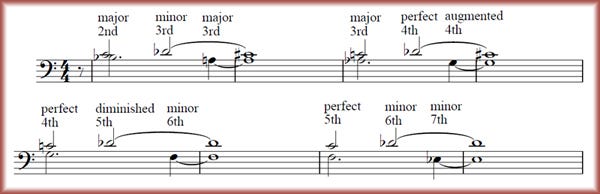
What Morricone built, and what Carpenter then cut and reassembled, repays close listening from anyone who understands how harmonic structure works. “Humanity II”, the film’s central theme that opens the film and closes it, is built on a heartbeat motif in the synthesizer, a single repeated pulse that establishes itself like a Baroque ground bass and then refuses to move. Press play. Then keep reading.
On top of this ostinato, two synthesizer voices enter and begin a slow harmonic expansion: the interval between them widens, across the course of the piece, from a major second, the tightest, most dissonant interval in Western harmony short of a semitone, outward to a minor seventh. The effect is of something slowly opening, distending, growing into a shape the ear cannot quite anticipate. The harmonic movement is at once completely logical, step by step, and completely alien in its destination. Morricone was writing the creature’s biology in intervals. The strophic form cycles in twelve-bar phrases, four groups of three, round and round without resolution, accumulating intensity through timbre and register alone. No melodic development, no harmonic arrival, no cadence. The Baroque parallel is not incidental: a ground bass exists to deny the listener the resolution they have been trained to expect. The Thing’s score is built on the same principle. It will not resolve. It cannot resolve. The creature will not stop either.
Carpenter’s most consequential decision regarding this music was editorial rather than compositional. The full version of “Humanity II,” as Morricone wrote it, transforms at 4’27” into something entirely different: the restraint breaks open, church organ chords erupt, the metronomic pulse becomes aggressive and loud. It is a dramatic climax, and it is everything the film refuses to give its audience. Carpenter cut it. The version heard in the film never reaches that point: the accumulating tension simply continues, unresolved, until the screen goes dark. This is not a composer’s decision. It is an editor’s decision applied to a score. The same instinct that drove Ramsay to cut dialogue scenes that let the audience breathe drove Carpenter to cut the moment in the music where the audience would have been allowed to feel something definitive. Comfort, again, is the enemy.
What replaced the discarded Morricone cues was not, strictly speaking, music. Carpenter and Howarth recorded replacement material in a matter of days, working with synthesizers to produce what Carpenter later described with disarming precision: "It was not really music at all but just background sounds, something today you might even consider as sound effects." This is not modesty. It is an accurate description of pieces that were designed to occupy the border between score and atmosphere, between something the audience hears and something the audience feels without identifying. The Carpenter/Howarth cues are tones, sustained drones, textures that sit beneath the image like a low-grade fever. They do not announce themselves. They do not develop. They simply persist, and the longer they persist, the less certain you become about whether you are hearing music or hearing the building itself. In a film about a creature that hides by becoming indistinguishable from its environment, even the replacement score learned to imitate its surroundings.
The score’s deployment across the film is equally precise. Of the six major creature appearances, three, including the kennel sequence and the final confrontation, are underscored only by a low synthesizer drone, a sustained non-pitch that sits below the threshold of melody. Two - the chest-chomp and the blood test - are completely unscored. No music at all. What fills the space is Bottin’s sound and the audience’s nervous system. The discovery of the partially assimilated Bennings gets a sustained church organ chord, its liturgical overtones turning a moment of horror into something closer to a grotesque consecration. Morricone understood the difference between these moments even if Carpenter had to show him where each one fell in the cut.
The sound design operates on a parallel logic to the score: no signature, no fixed identity, no single sound that belongs definitively to the creature. David Lewis Yewdall and Colin Mouat, the supervising sound editors, began with the intention of creating a recognizable monster voice, something you would hear first on the audiotape at the Norwegian camp and then again each time the creature manifested. The idea was abandoned when the creature itself abandoned the idea of a final form. A shapeshifter cannot have a fixed acoustic signature. What replaced it was accumulation and improvisation: layers of processed organic sound, different for each transformation, each built from whatever material would serve that specific sequence. The blood reacting to the hot wire in the petri dish test (that sideways crawl that makes half the audience grab the armrest) is the sound of fingertips dragged slowly across a fiberglass shower wall, pitch-shifted and filtered until it belongs to nothing you have ever heard and everything you do not want to touch. There is one moment in the film where the seams show, and Cohen himself admitted it. When Palmer's blood reacts and the room erupts, the screams of the men tied to their chairs were added in post-production to fill dead space in the sequence. Watch the mouths: they do not match. "Probably not our finest hour," Cohen wrote. It is the only false note in a film that otherwise plays its sound with total conviction, and it is worth knowing about precisely because everything else is so exact. The Blair-Thing’s final roar draws on recordings of bears and lions, processed until the animal origin is felt rather than recognized. The wind outside the base is not treated as ambient background. It is scored like an instrument, its frequency and intensity modulated scene by scene to carry whatever emotional pressure the image alone cannot sustain. When the base is quiet and the men are waiting, the wind is what the silence sounds like.
The film was mixed in Dolby Stereo, which in 1982 was still a relatively new tool in mainstream cinema. The practical consequence for The Thing is spatial: the creature's sounds do not come from a fixed point. The wind moves. The transformations breathe outward into the room. A shapeshifter cannot be localised on screen. Carpenter and the sound team made sure it could not be localised in the audio field either. This is not a technical footnote. It is the same idea as the kennel sequence, the same idea as the split diopter, the same idea as the anamorphic frame: every discipline on this film was working toward the same conclusion. You cannot find it. You cannot pin it down. You cannot tell where it is coming from.
The bodies on the table. The acting.
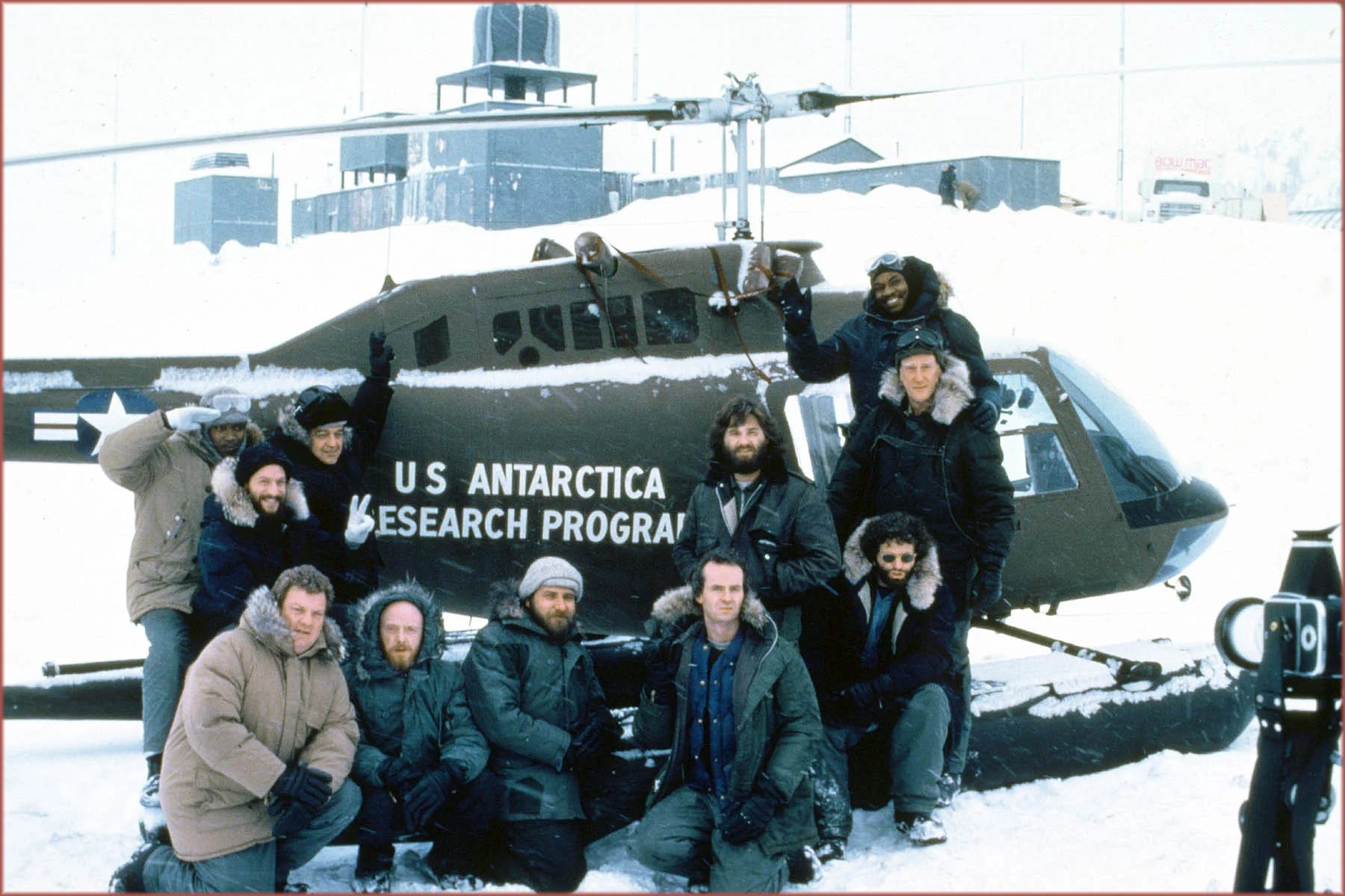
Carpenter asked for two weeks of rehearsal before a single frame was shot. In 1982 this was unusual enough to require justification. His justification was simple: twelve men confined to the same building for 109 minutes need to feel like they have been there for months before the camera turns on. Paranoia is not something you write into a screenplay. It lives in the specific way a man holds his coffee cup when he is not sure about the man across from him. You cannot fake that in the first week. You earn it.
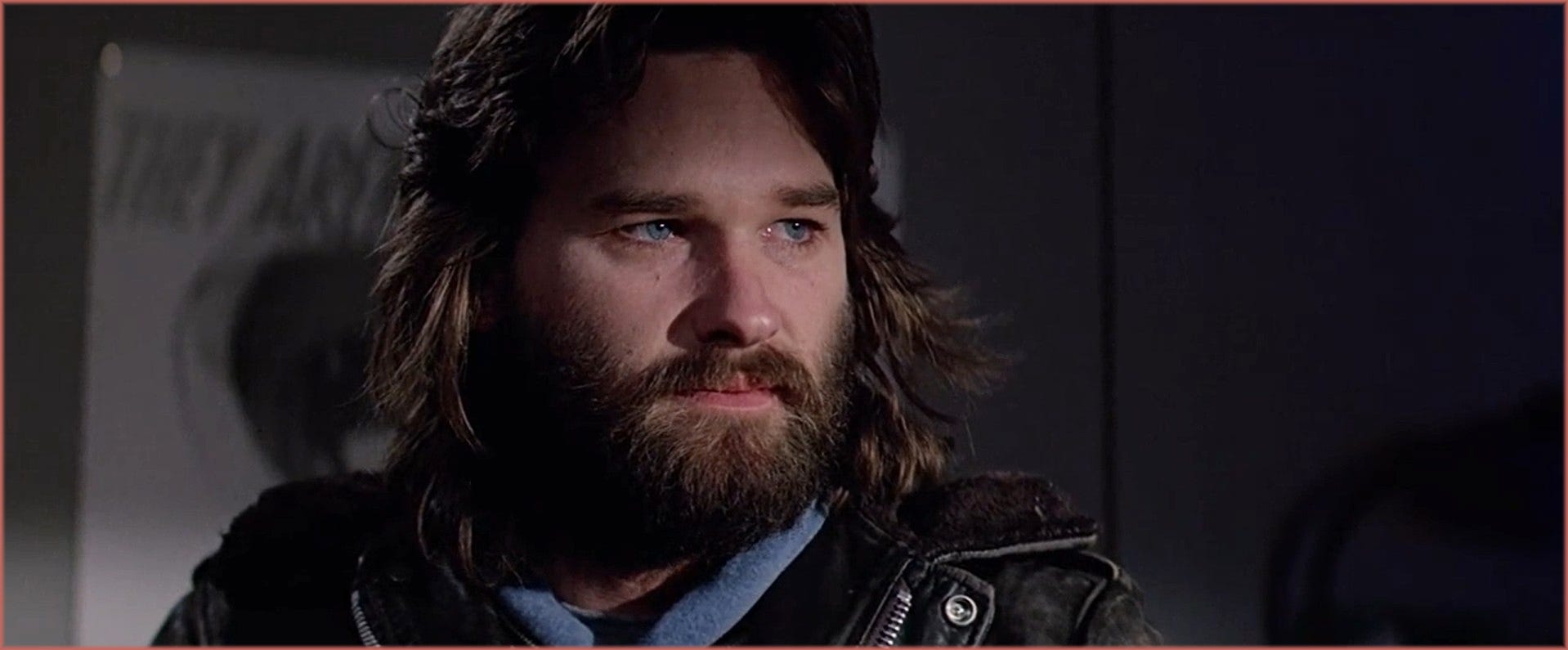
Kurt Russell was involved in the production before he was officially cast, helping Carpenter develop ideas, thinking through the film’s logic, functioning as a collaborator rather than a hire. He was the last of the twelve to be confirmed. By the time the camera found MacReady, Russell had been inside this story long enough to know it from the inside out. Carpenter described his working relationship with Russell in few words: “He knows what he’s doing.” Not a compliment: a diagnosis. When Carpenter corrected Russell’s initial reading (“this is not a monster movie, it is a story about paranoia”) Russell has said the correction hit him immediately and completely. Everything he does in the film flows from that single reframe. MacReady is not fighting the Thing. He is managing the disintegration of a group of men who may or may not still be men. Watch his eyes in the scenes where he is not speaking. He is not listening. He is reading.
Wilford Brimley had been a blacksmith before he was an actor. He shod horses on western sets, spent years on the periphery of the industry, and started getting small parts because he was there and because he was exactly who he appeared to be. Richard Masur put it simply after Brimley died: "A no-nonsense guy who always told the truth. That made him a great actor." Carpenter cast him as Blair specifically because he was unknown enough that the audience would not calculate his absence too soon. Blair is the first man who understands what is happening, and the first man to break under the weight of that understanding. You need to believe, when he goes, that you have lost the most reliable mind in the room. Brimley could do this because he did not perform reliability. He simply was it. During rehearsals for the examination of the Norwegian creature, he looked at the prop on the table, looked up at the assembled cast, and said: "Do I have to say all this stuff?" Keith David, who was in the room, still laughs about it. He did not have to say all of it.
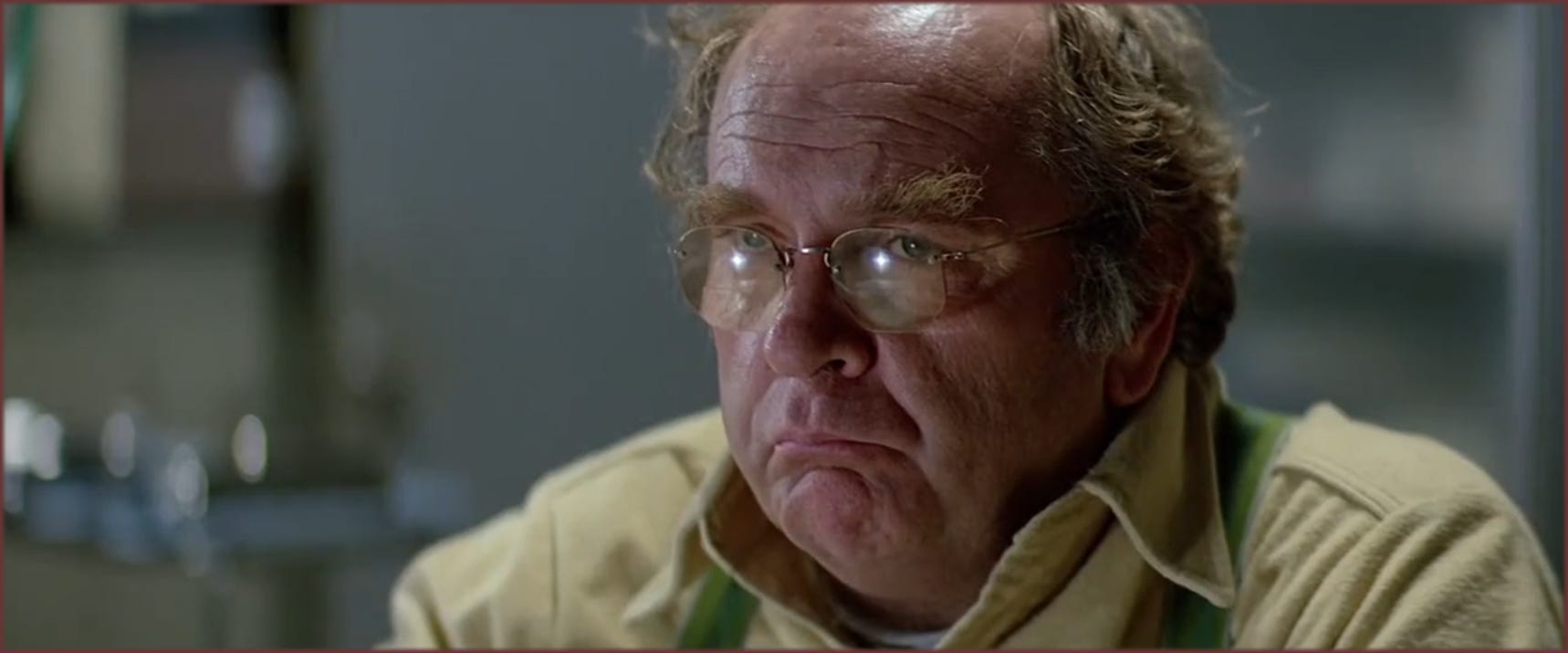
Keith David came from Juilliard, which in 1982 meant something specific: four years of training built on classical technique, physical preparation, voice work, the assumption that the body is an instrument that needs to be tuned before it can be played. He graduated alongside Thomas Waites, Robin Williams, Christopher Reeve. This was his first significant film role. Masur and Donald Moffat, both considerably more experienced in front of a camera, worked with him during rehearsals to find where to stop. What David brought to Childs was physical: a man who occupies space like he has decided, somewhere before the film begins, that he will not be moved. It reads as threat. It also reads as the particular stillness of someone who already knows something the room does not. Whether that reading is correct is the question the film refuses to answer. David and Masur made their own decision during rehearsals: Clark and Childs would not like each other. Nobody asked them to. It is not in the screenplay. It is in every scene they share.
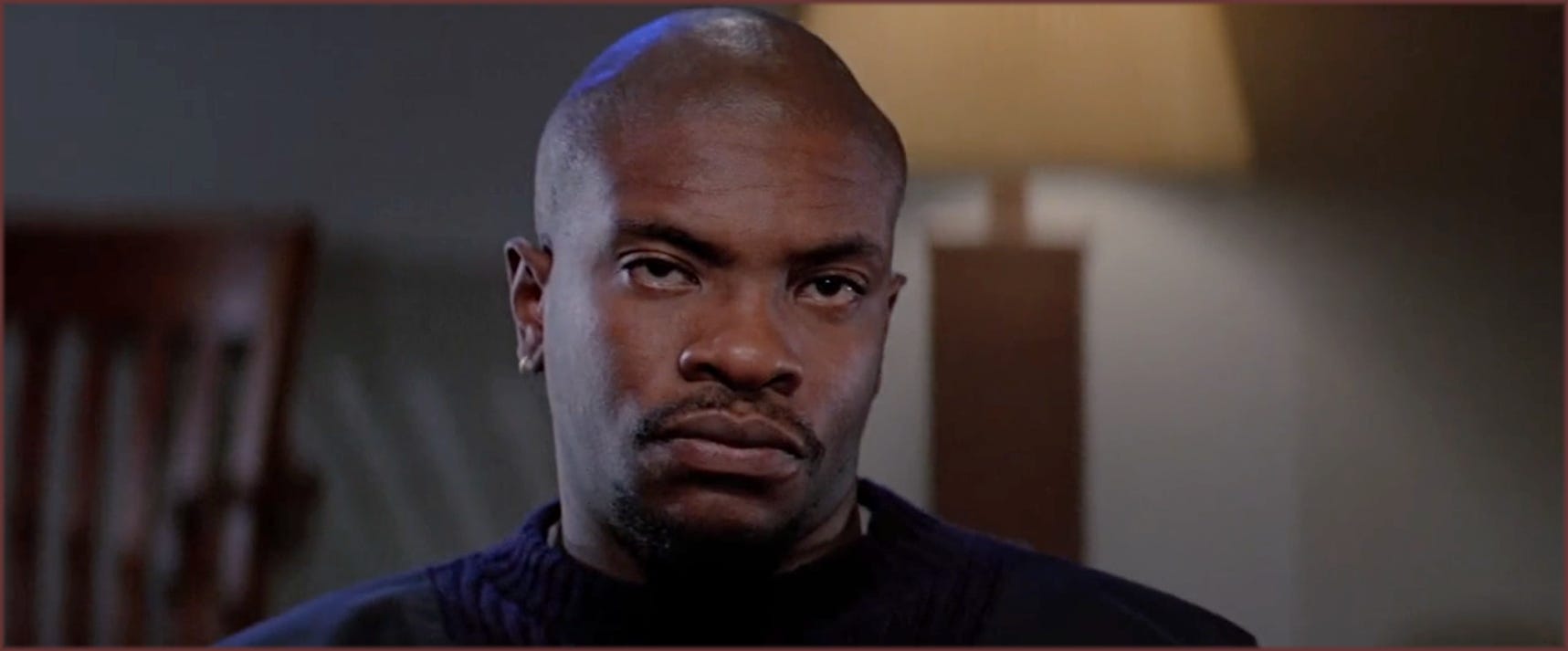
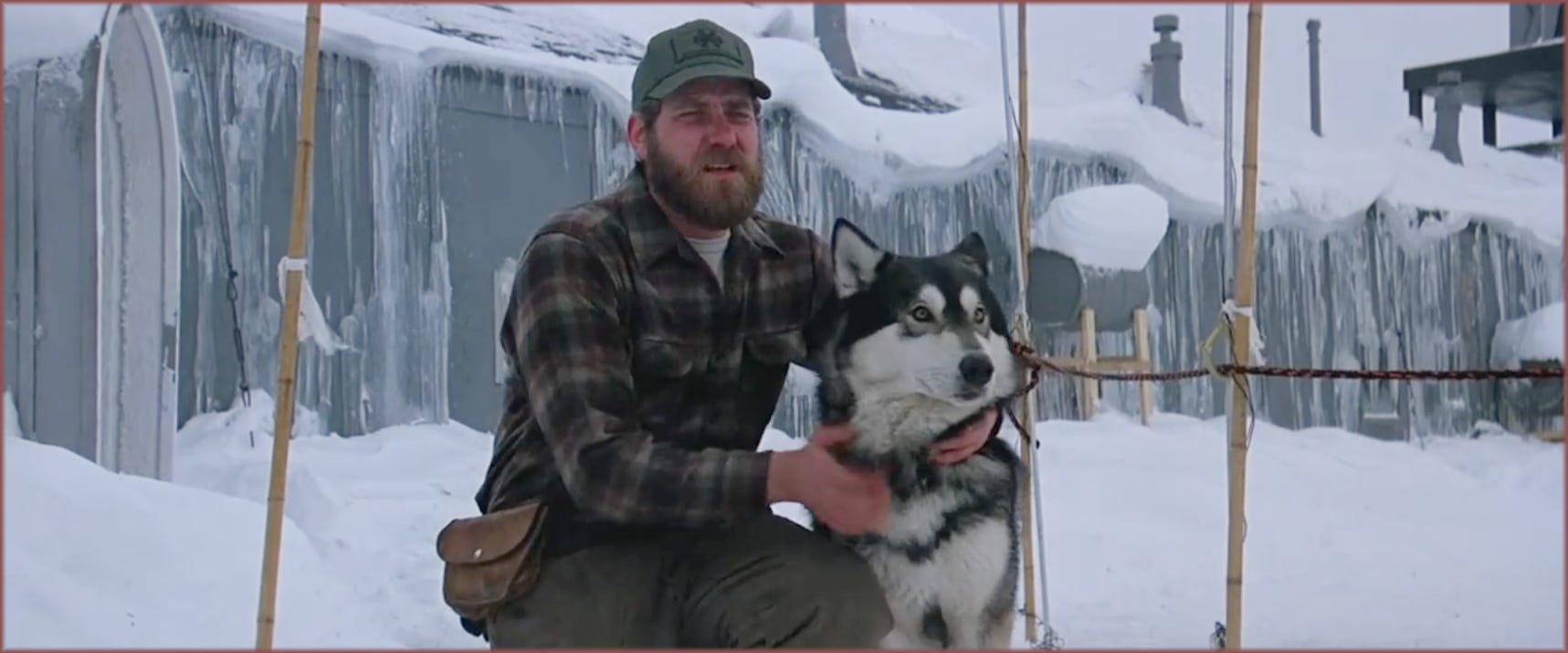
Richard Masur turned down a role in E.T. the Extra-Terrestrial to play Clark. In the summer of 1981 this was not the obvious choice it looks like in retrospect. E.T. had not yet happened, it was simply an upcoming Spielberg film. Masur chose the dog handler in a John Carpenter creature feature instead, and then spent the rehearsal period working daily with Jed and his trainer Clint Rowe, letting the animal get used to his presence until the dog would stand next to him without scanning the room for Rowe. This is not a trivial detail. Clark's relationship with the dogs is the only genuinely tender thing in the film, the one instance where an Outpost 31 man's attachment to another living creature is not contaminated by suspicion. Masur built that from the ground up, in the snow, before the camera was ever present. He also went to a survivalist store and bought a flip knife for the character, because Clark is the kind of man who carries one. In the blood test sequence, Clark lunges at MacReady with the scalpel and MacReady shoots him. Both men are human at that moment. Clark does not trust MacReady; MacReady does not trust Clark; and the Thing, bound to a chair a few feet away, does not have to do anything at all. Masur's Clark is the film's quiet casualty: not a victim of the creature, but of the atmosphere the creature created.
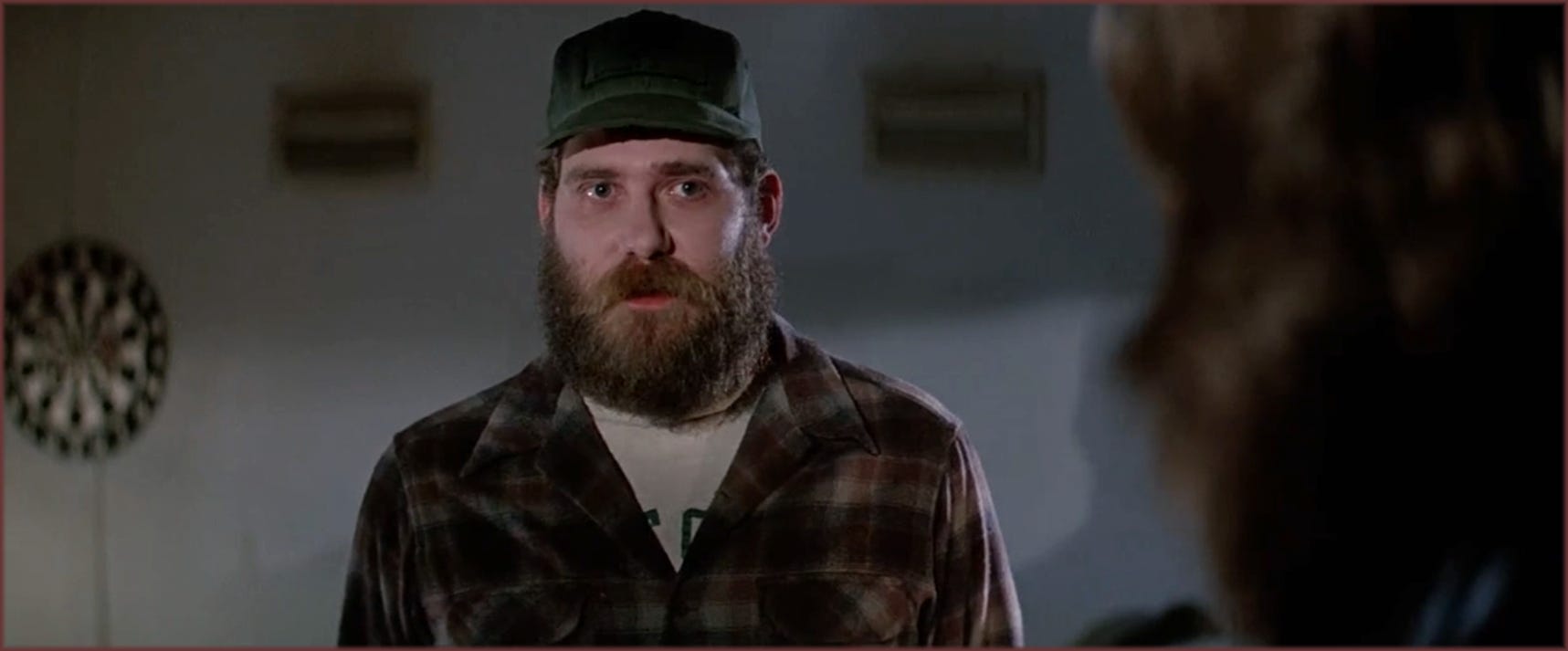
Thomas Waites and David Clennon arrived at this film from opposite directions and ended up playing the two most narratively convenient deaths in it. Windows and Palmer, the men the story needs to consume before the final confrontation. Waites came from Juilliard and from a stage career that had included work alongside Al Pacino, which is its own education in holding your ground when the room gets intense. He was cast because Carpenter saw him in a production of David Mamet’s American Buffalo (Russell was there too) and asked him to read for the radio operator. During a costume fitting, Waites tried on a large pair of dark glasses and proposed renaming the character Windows. Carpenter said yes without hesitation. Waites also proposed a subplot in which Windows and Palmer conspire against the rest of the group. Carpenter said no, correctly: the film’s paranoia works precisely because nobody is conspiring. Everyone is simply terrified, and terror in close quarters is indistinguishable from guilt.
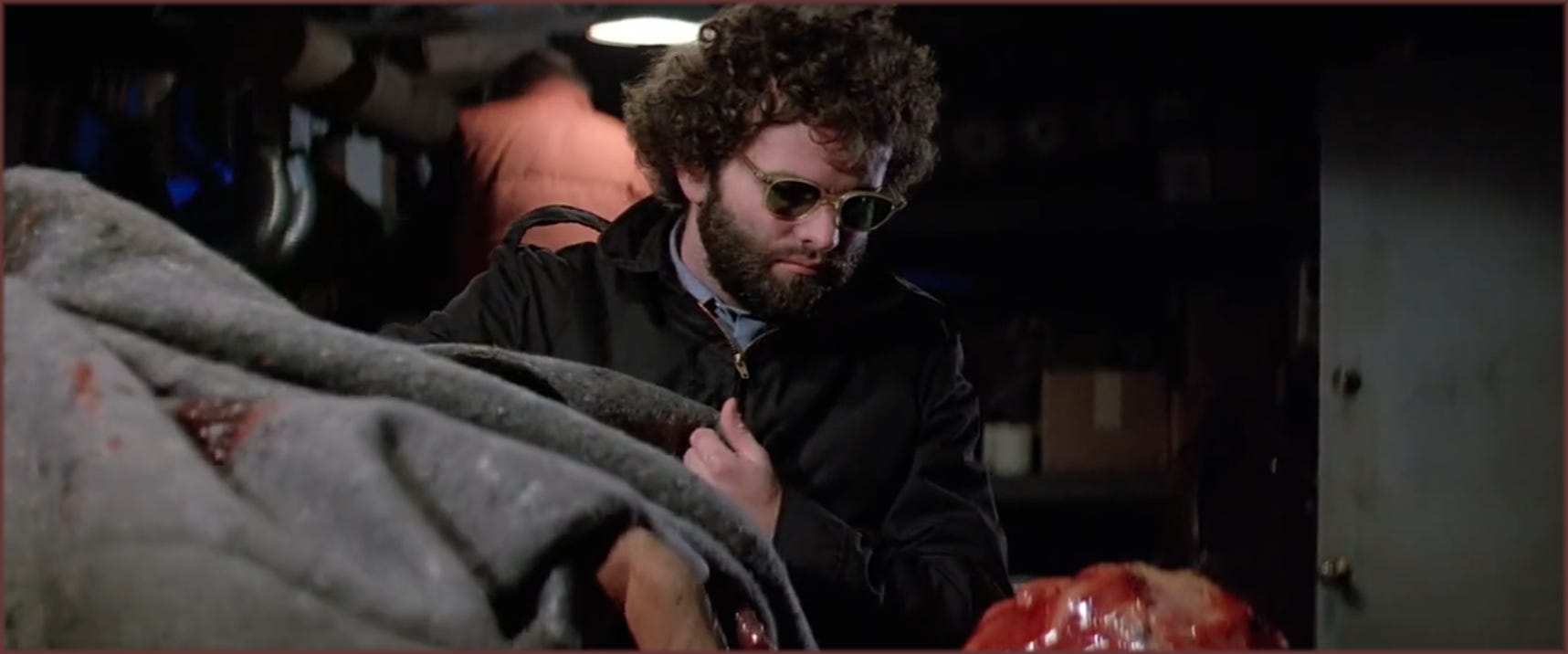
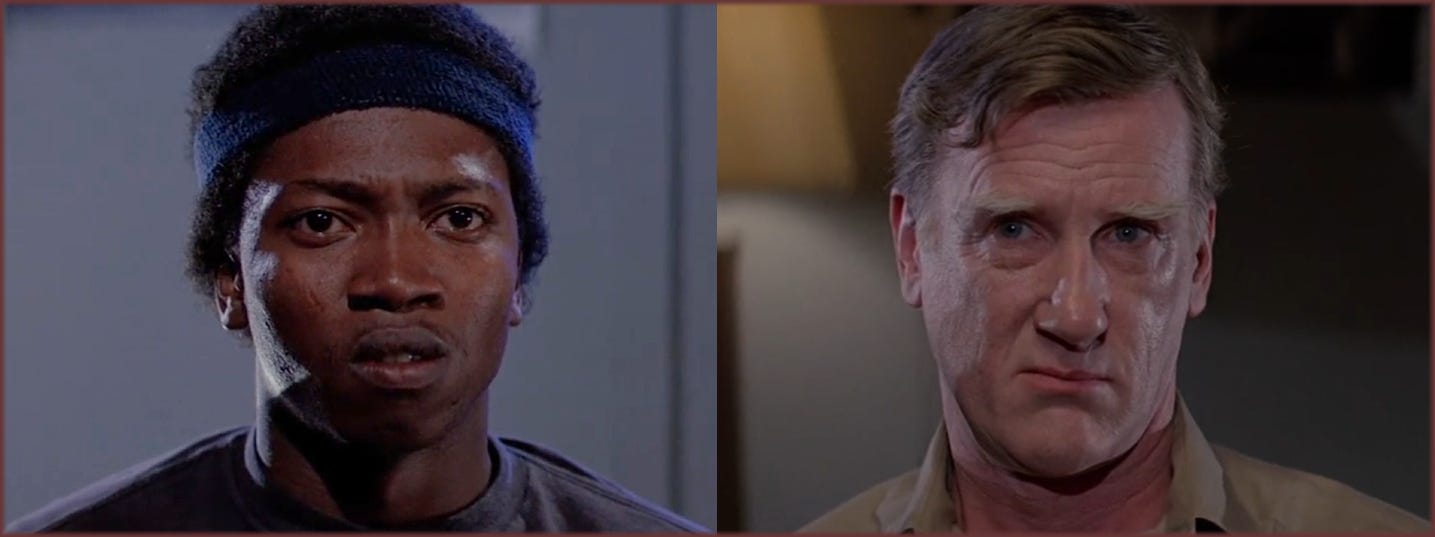
Clennon was not Universal’s first idea for Palmer. The studio suggested comedians (Jay Leno, Garry Shandling, Charles Fleischer among them) because Palmer has moments of stoned levity that seemed to call for someone whose natural register was comic. Carpenter chose Clennon, who had read for Bennings but asked for Palmer because he wanted the blue-collar stoner over the white-collar scientist. Even Rob Bottin wanted the role: he had built every creature in the film and apparently felt this entitled him to at least one human part. He was told no. Clennon's most important moment in the film comes when the Norris-Thing's detached head sprouts spider legs and begins moving across the floor. Palmer stares at it and says: "You gotta be fucking kidding." It is the line that gets the laugh, every time, in every screening. What makes the line stick is what comes immediately after: the blood test, in which Palmer is revealed. Whether he was already the Thing when he said those words, or became it in the minutes the film does not show us, or was genuinely reacting and genuinely unaware, nobody knows. Carpenter never answered. The line sits at the edge of that uncertainty and refuses to fall on either side of it.
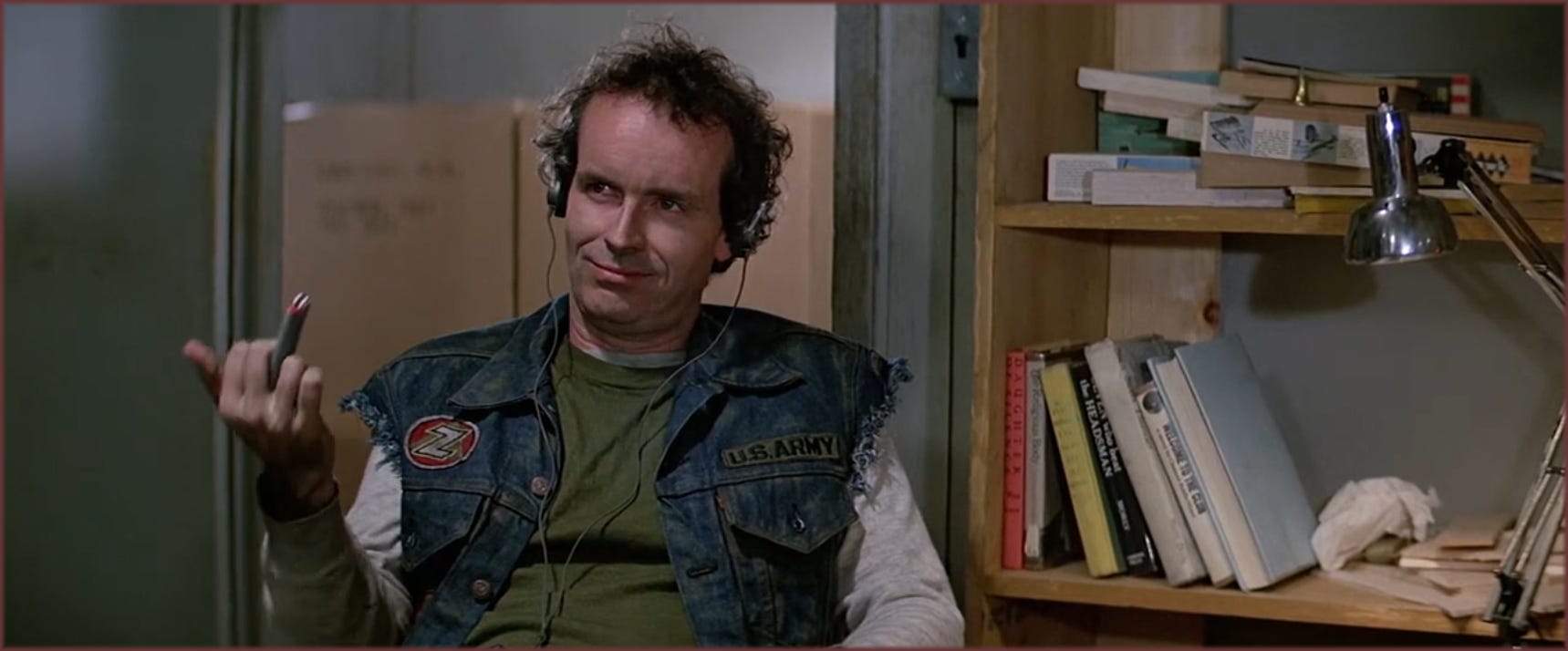
The rest of the ensemble fills the frame without demanding it. Donald Moffat's Garry is the only figure of institutional authority in the film, and Carpenter spends the entire second act dismantling him: the gun taken away, the command stripped, the man reduced to a suspect tied to a couch. Moffat plays the humiliation with a dignity that makes it worse. T.K. Carter's Nauls is the film's only consistent source of warmth, skating through corridors on roller skates with Al Green on the tape deck, and Carter understood that this was not comic relief but something more precise: proof that these were real men with real lives before the Thing walked through the door wearing a dog.
The most disciplined performance in the film belongs to a wolf-malamute hybrid listed in the credits simply as Jed. As we have seen, Masur worked with Jed and his trainer Clint Rowe throughout rehearsals so the animal would stand beside him without seeking Rowe out.
We have already seen, in the Director's vital signs, how Carpenter and Cundey turned that stillness into a weapon. Forty years later, the early scenes with Jed remain among the most unsettling in the film not because of what he does, but because of what he does not do. A dog that does not behave like a dog is, it turns out, as frightening as almost anything Bottin built.
Before we continue. You have made it through the screenplay, the direction, the cinematography, the editing, the score, and the performances. Everything that follows is physical: how the world was built, what the creatures were made of, how the production survived, and what Dr. Frame makes of it all.
The host. The locations.
John J. Lloyd had been designing sets for decades before this film. He knew how rooms work, how a space can make you feel trapped before anything threatening has entered it. What he built for Outpost 31 was not a research station. It was a maze with no legend. No shot in the film gives you a reliable sense of where you are in relation to anything else. You never know how many rooms separate you from the man you were just talking to, or whether the corridor ahead connects to somewhere safe. Carpenter never shows you the whole compound. You get pieces of it, one at a time, always slightly disorienting, never enough to build a mental map. Cundey, who had spent his career shooting real locations, told Carpenter the collaboration with Lloyd was a revelation: the first production designer he had worked with who thought about camera angles before the crew arrived, who built rooms that already knew where the lens would go. The space and the camera had agreed on something before the actors stepped in. What they had agreed on was that nobody in this building should ever feel comfortable.
The walls were originally painted hospital green. Carpenter had them redone in flat grey, and the decision cascades through every frame of the film. Twelve men in identical grey parkas moving through grey corridors begin to dissolve into each other. This is partly why the widescreen format was chosen, as we have already discussed, to keep all faces simultaneously visible against a world that would otherwise swallow them. But the grey serves another purpose that is easy to miss until you see it working. The grey also serves the creatures. As we saw in the Eye exam, when the Thing tears itself open, it bleeds the only warm colors in a world that has been drained of them. Lloyd made sure the canvas was blank. Cundey made sure only the parasite was allowed to paint on it.
The interiors were shot at Universal Studios Hollywood, on stages that the crew refrigerated to roughly 40°F and then filled with humidifiers and misters until the air itself was visible. The breath of actors in some indoor scenes is real. Not a special effect, not an optical trick: cold air meeting warm lungs, recorded on film. Cundey asked Lloyd to let the pipes and ductwork protrude into the ceiling of every room; we have discussed in the Eye exam in terms of what it does to the light. What it does to the space is something else: a ceiling full of industrial intestine pressing down on men who are running out of options. Lloyd built the compound to feel like a body from the inside. Every room is an organ. The corridors are the arteries. And somewhere in the circulatory system, something has already contaminated the blood.
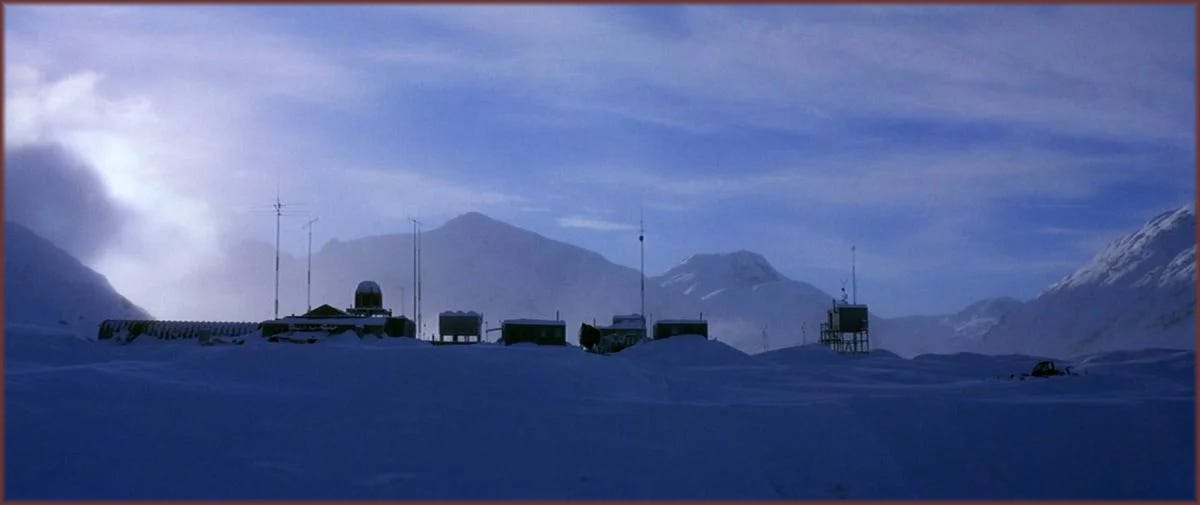
The exterior location was Stewart, British Columbia, chosen because it was then the snowfall capital of the world and could guarantee accumulation by December. The set was built on Salmon Glacier, fifteen miles north of town, accessible only via a forty-three kilometre road so narrow and so precipitous that a crew bus came within seconds of going over the edge, a hundred and fifty metre drop to the valley below. The crew lived in town and on residential barges moored on the Portland Canal. They built the exterior set in summer, under full sun, with actors sweating in parkas while tourists stopped to stare. When winter arrived it arrived completely, and the cameras finally had their Antarctica. What nobody anticipated was that the set would outlast the film by more than twenty years. In 2003, two researchers hiked to the glacier and found the site still there: hundreds of timber fragments, still painted grey, scattered across the ice. And the Norwegian helicopter from the film's opening sequence, its wreckage lying exactly where it had been left in 1981. The production was long gone. It's remains were not.
The Norwegian camp sequence deserves its own note, because what you are watching when you watch it is not a Norwegian camp. It is the American outpost. After the explosion that ends the film was shot, Carpenter filmed the wreckage as the opening of the story. Stuart Cohen has estimated the decision saved two hundred and fifty thousand dollars. It also created something that no budget calculation could have predicted: a subliminal echo between the film's first image and its last, a sense that this place has always been a ruin, that the story was already over before it began, that MacReady and Copper walking through the charred Norwegian camp are walking through a future they do not yet know is theirs.
The alien spacecraft buried in the glacier was achieved through a scale model and a matte painting by Albert Whitlock, one of the last great practitioners of a craft that digital production has since made obsolete. Whitlock had painted illusions for Hitchcock, for Spielberg, for decades of Hollywood that needed worlds it could not afford to build. What he gave this film was a hole in the earth large enough to have swallowed something that had been there for a hundred thousand years. But it is not the spacecraft that stays with you. It is the rectangular void cut into the ice beside it, the shape of what was removed. The men stand at the edge and look down into it and find nothing. No creature, no explanation, no trace of what climbed out and walked away. Michael Brown, in his essay on the film, reads this void as a portrait of negative knowledge: the absence of the Thing is as frightening as its presence, because absence means it is somewhere else. It has to be somewhere. The void in the ice is the film's first unanswerable question and its most honest image, a frame with nothing in it, demanding that you fill it yourself.
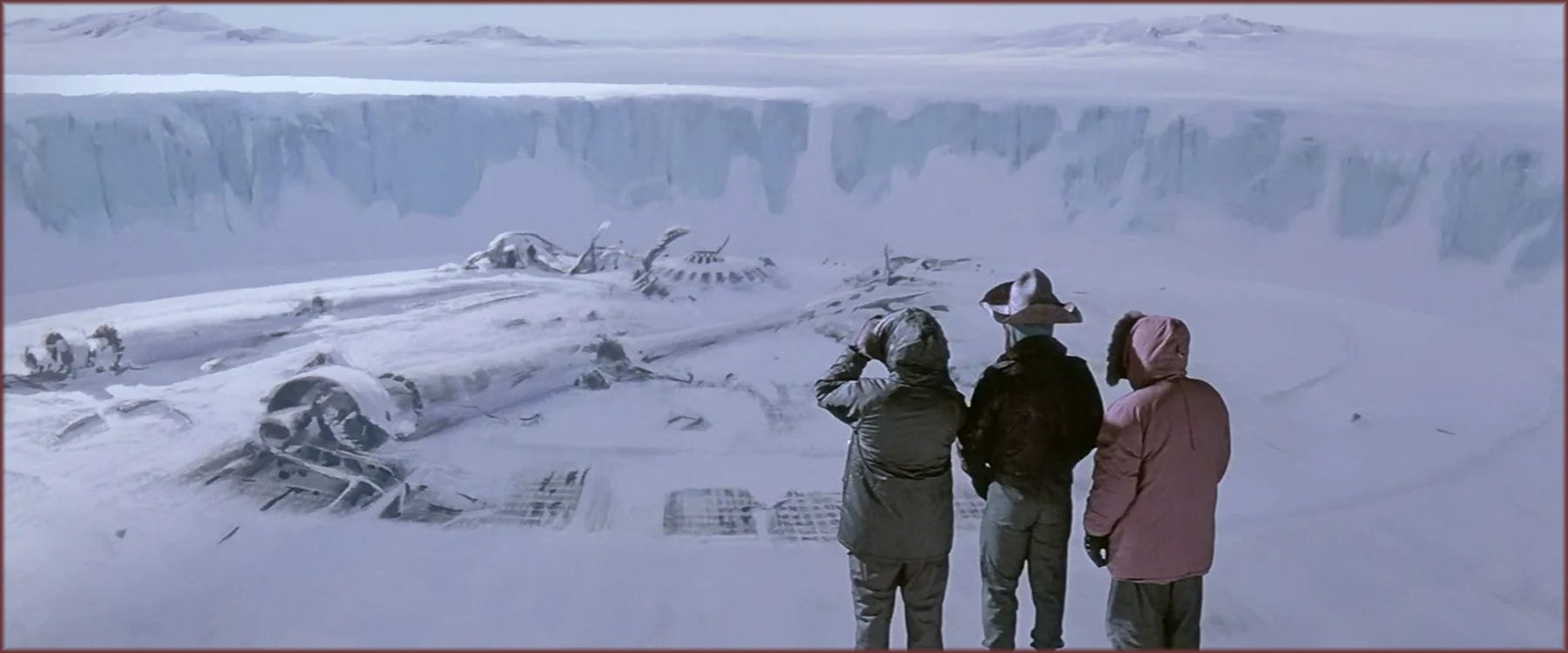
Under the lens: matte painting
A matte painting is exactly what the name suggests: a painting, traditionally oil on glass, that is combined with live-action footage to create a location that does not exist or cannot be afforded. The camera films the real elements: actors, practical sets, location. The painting fills in everything else: the alien spacecraft buried in the glacier, the scale of a destruction too large to build. Whitlock's particular genius was that he painted in f-stops: he calculated the light in his paintings to match the key lights and fill of the original photography, entirely in his head, so that when the two elements were combined on the negative they read as a single continuous image. No digital compositing, no green screen. Just oils, glass, and a man who understood light well enough to fake it at the molecular level. He worked with Hitchcock for decades. He won two Oscars. And when John Carpenter hired him for The Thing, Whitlock apparently disliked the director enough to hand the actual painting work to his assistants. The spacecraft you see on screen was painted by Whitlock's team, not by Whitlock.
Prosthetic ward. The Visual effects.
Rob Bottin was twenty-two years old when John Carpenter handed him the keys to the operating room. He had apprenticed under Rick Baker since the age of fourteen, learning to build monsters while other teenagers were still deciding what to do with their lives, and had already delivered the werewolf transformation in The Howling before Baker himself had finished his own for An American Werewolf in London. He was not a prodigy in the sense of someone who arrives fully formed. He was something rarer: someone who simply could not stop. Carpenter had seen this quality up close on The Fog and recognised it for what it was: not talent exactly, but a constitutional inability to consider the alternative. When Bottin took the job, work on The Thing began in April 1981. It would not stop until late May 1982. Fifty-seven weeks, seven days a week, eighteen hours a day toward the end. He slept on the floor of the Universal Studios locker rooms. He lived on candy bars and Coca-Cola. When filming finally wrapped, he checked himself into a hospital with exhaustion, double pneumonia and a bleeding ulcer. The creatures were finished. Two weeks in hospital, and then back to work.
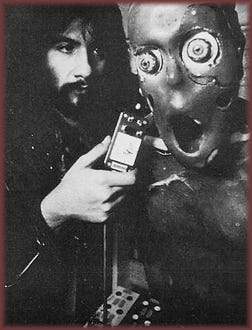
Before Bottin, there was Dale Kuipers. Kuipers had been hired first, and his concept for the creature was genuinely interesting: not a shapeshifter in the physical sense, but a psychological predator: an alien that projected hallucinations directly into human minds, making its victims see monstrous forms that existed only inside their own heads. It was a defensible idea, and it would have produced a very different film. It did not produce any film at all, because a man threw Kuipers headfirst through a plate glass window before production could begin. He never recovered in time. Bottin stepped in, and immediately made clear he had no interest in working from someone else's designs. Carpenter gave him the room. What Bottin brought instead was a concept that flipped Kuipers's logic entirely: the creature would not project illusions outward but it would absorb reality inward. It had traveled the galaxy. It had assimilated lifeforms on worlds the human mind could not conceive. Every transformation was a memory. Every eruption of flesh was the record of something the Thing had already been, on some planet, around some star, before it ever reached Antarctica. "Since it had been all over the galaxy," Bottin said, "it could call upon anything it needed whenever it needed it." Carpenter heard this and immediately understood that he was no longer making a monster movie. He was making a film about an infinite biological archive that had woken up cold and hungry.
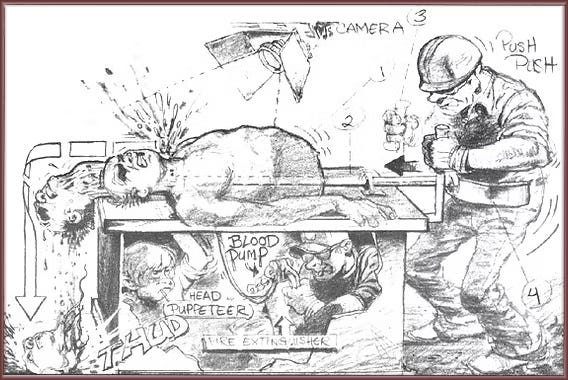
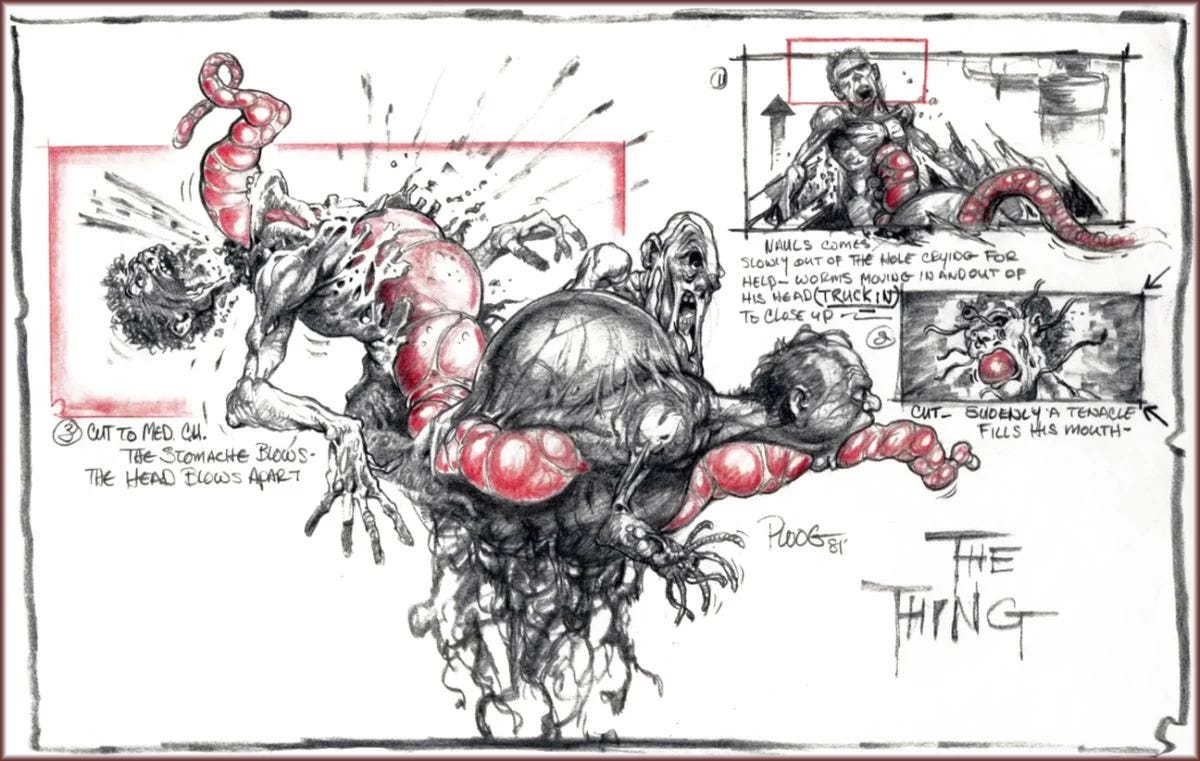
Bottin could not draw fast enough to keep up with his own ideas, so Carpenter brought in comic book illustrator Mike Ploog. The two worked through the night for weeks, and the method they developed was as revealing as anything that came out of it. Bottin refused to think about feasibility during the creative phase: "I don't think of ideas in the sense of 'can I do them?'" he explained, "because I think it restricts me", which meant that Ploog's job was not to illustrate solutions but to give form to ideas that had no technical answer yet. A walking mouth on legs. Eyeballs on a mouth. A head that detaches and grows spider legs. Each time Ploog pushed back, Bottin pushed harder, and each time they would eventually sit down with the drawing and work out, after the fact, whether the thing on the page could be made to exist in three dimensions under a camera. Most of the time it could. What remained after this process of imagining first and solving second was a creature that no single person had fully designed. It had emerged, almost organically, from the collision between Bottin's refusal to set limits and Ploog's ability to make the limitless visible on paper. When Lancaster saw the drawings pinned across an entire office wall and asked Bottin whether any of it was actually possible, Bottin said: "Sure." He did not know yet how he was going to do most of it. That, he had decided, was a problem for later.
The ingredients list for The Thing reads like the fever dream of a chef who has lost his mind and his license simultaneously. Heated bubble gum. Strawberry jam. Mayonnaise. Creamed corn. Gelatin. Food thickener, the same kind used to make the creature in The Blob. KY Jelly by the five-gallon bucket. Foam latex, fiberglass, rubber, silicone, urethane. Steel and aluminium armatures, custom-machined joint by joint, built to move with a precision that the foam latex skin above them would never reveal. Bottin's summary of the technical approach was precise: "If you named it, we used it." What is remarkable about this list is not its absurdity but its logic. Each material was chosen for a specific physical property. The way bubble gum, heated and stretched, produces filaments that catch light like biological tissue; the way creamed corn moves when disturbed, slowly, with the reluctant viscosity of something that would rather not be touched. Bottin was not cooking. He was engineering the precise textures of biological violation, and he happened to need a grocery store to do it.
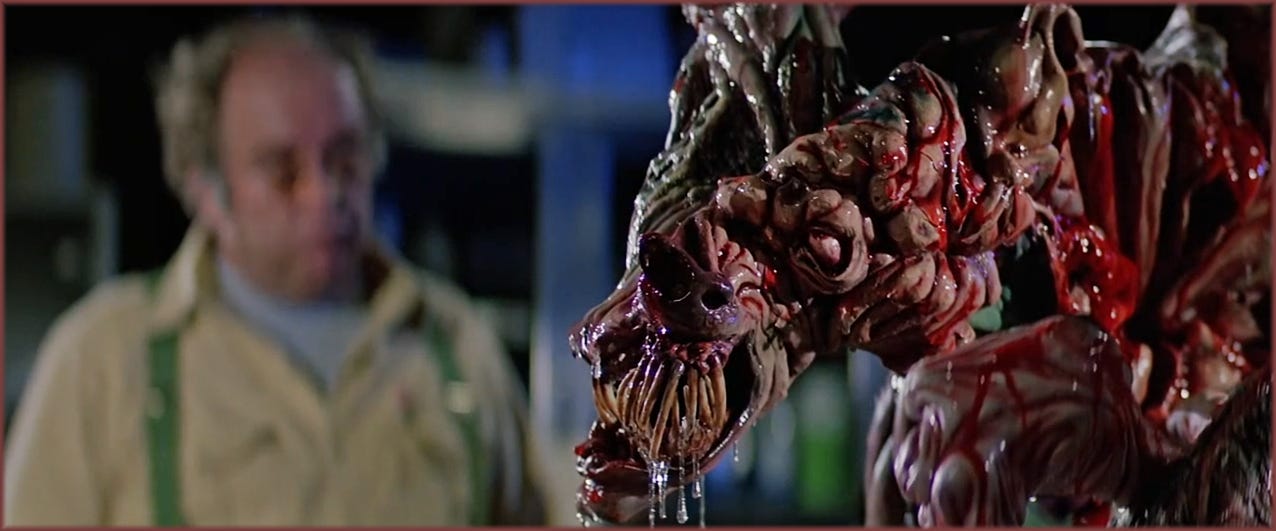
The kennel sequence was not Bottin's work. This requires a moment of explanation, because the kennel sequence is one of the most technically extraordinary things in the film, and the instinct is to attribute it to the man whose name is on everything else. But Bottin had spent the entirety of The Howling building mechanical dogs, and by the time The Thing went into production he had made his position clear: no more dogs. He called Stan Winston, who was not yet the industry titan he would become but was already someone whose judgment Bottin trusted, and asked him to take the sequence. Winston agreed on one condition: that he receive no screen credit. "It's Rob's show," he said. What Winston built, with very little time available, was a hand puppet. He started with a photograph of himself with one hand raised and drew the Dog-Thing directly over his own silhouette, designing the creature to fit the puppeteer rather than the other way around. The final puppet, sculpted by Lance Anderson and Michiko Tagawa, with radio-controlled eyes and cable-operated legs, was worn by Anderson himself, who crouched beneath an elevated kennel set for two days, covered progressively in slime, operating the creature from below while explosive squibs detonated around his head. The tentacles that appear to slither out of the creature's body were shot in reverse: puppeteers underneath the set pulled them back in, and the footage was flipped. The flower-like mouth that erupts at the end of the sequence, twelve petals shaped like dog tongues, lined with rows of canine teeth, was built by Ken Diaz using a mould already made for the Norris-Thing neck, found lying in the effects shop. By the end of the project, Bottin's crew had accumulated enough spare parts to build entire new creatures from scavenged components. They did.
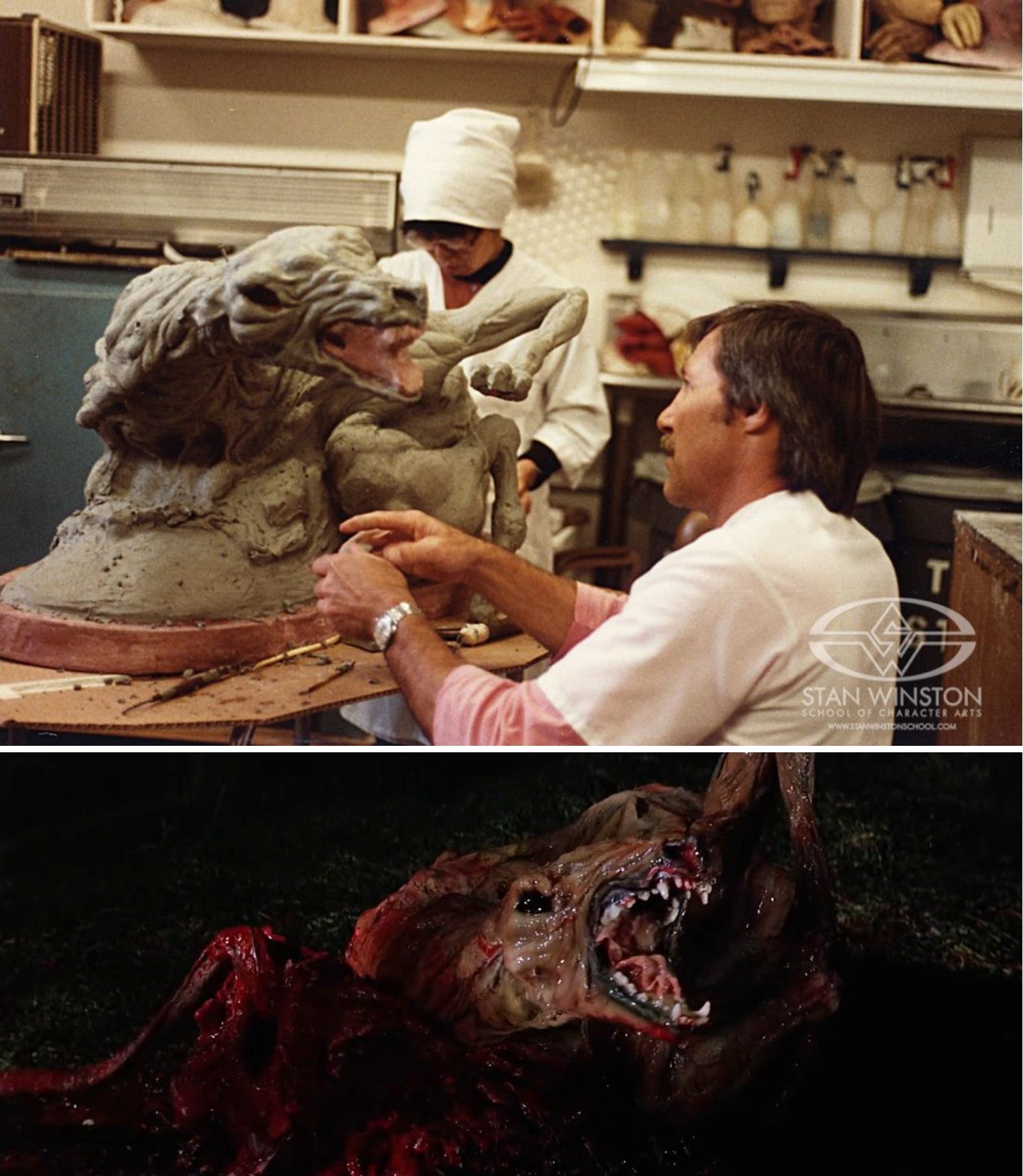
The Bennings-Thing's deformed hands, the ones visible before MacReady sets it on fire, are the Palmer-Thing's hands. Same moulds, repurposed. There was no time and no money for new ones, and Bottin’s crew had learned by then that the camera rarely asks where something came from; what it asks is whether it looks real.
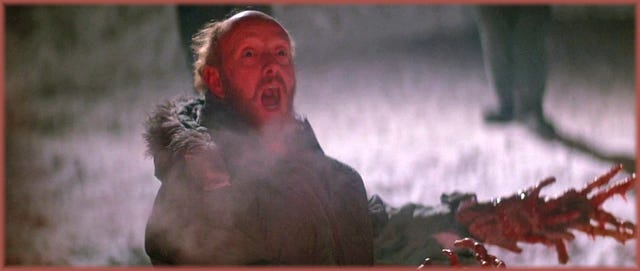
The same pragmatic ingenuity runs through the most complex sequence in the film. The defibrillation of Norris began, by Bottin’s own admission, as a joke. Carpenter had asked what happens next in the story, and Bottin, in a moment of black humor, said: this guy’s chest rips open and turns into a giant mouth and bites the doctor’s arms off. Carpenter looked at him and said: do it.
What followed was ten days of preparation for a sequence designed to be filmed in a single take. Hallahan spent those days with Bottin building a complete mould of his body: face in multiple expressions, hands, legs, torso. The crew photographed his chest hair pattern and assigned one person solely to reproduce it on the foam latex skin, follicle by follicle. For the shooting, Hallahan was positioned under the table with his head and shoulders emerging above, blending into the false torso. The chest-splitting mechanism was originally a scissor-type lever, but the technician beneath the table could not generate enough force to operate it, so Archie Gillett replaced it with a hydraulic ram. The jaws, lined with acrylic teeth sharp enough to cut, closed around replica arms built from gelatin, blood tubes and dental acrylic. When Copper falls back armless, it is not Richard Dysart on screen. It is Joe Carone, a real double amputee, wearing a mask built to reproduce Dysart’s features. The first take went wrong after ten hours of makeup. Carpenter was not satisfied with the tentacles and called a reset. The second take is the one in the film.
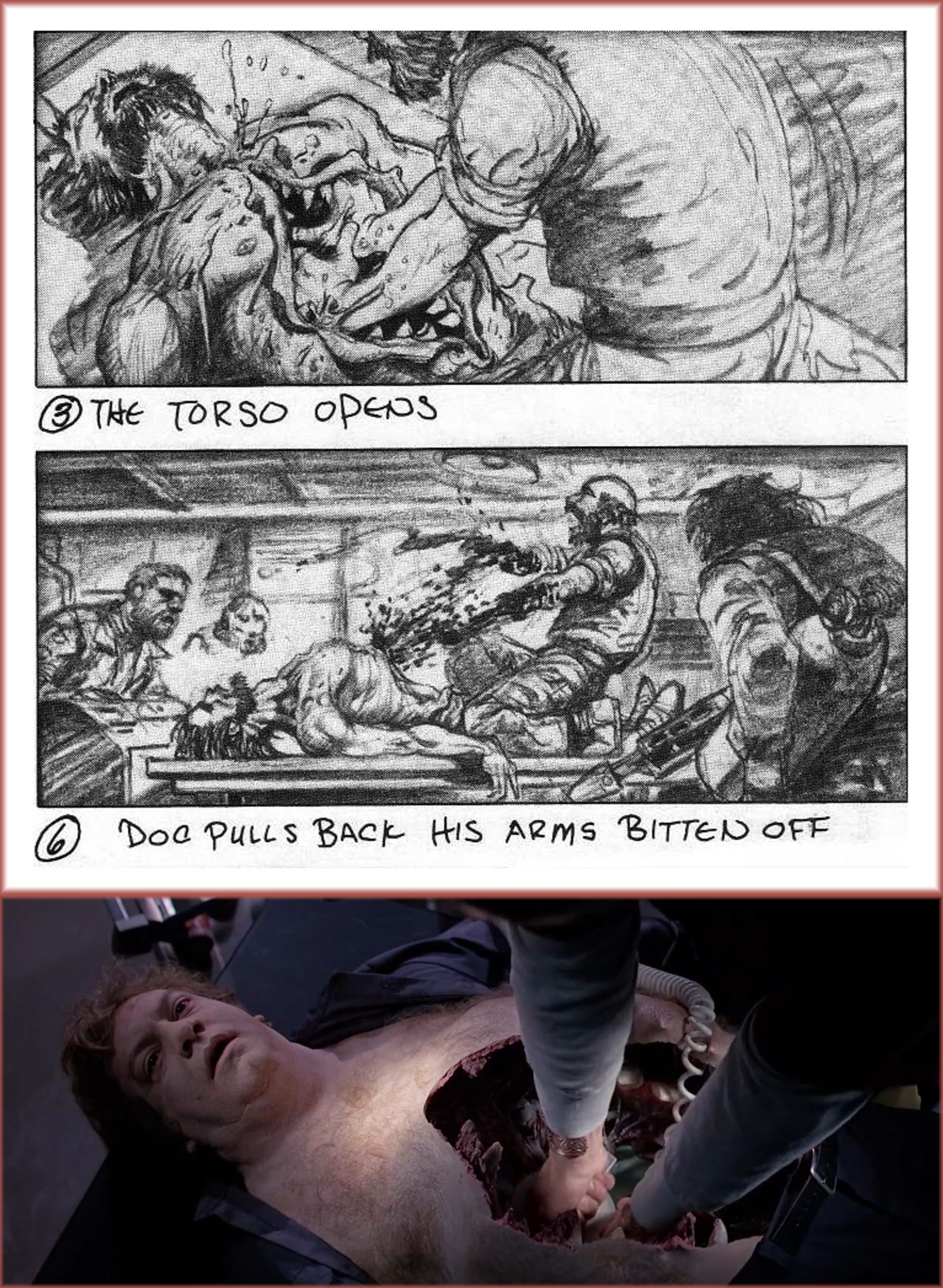
The sequence does not end with the chest. Once MacReady torches the Norris-Thing, the head detaches from the burning body and falls to the floor, and then, because Bottin felt the scene needed what he called “a little dark comic relief,” the head grows spider legs and walks away. The spider-head was a radio-controlled puppet mounted on a custom-built wheeled device engineered by Archie Gillett: the leg movements were linked directly to the drive motor, so as the wheels accelerated, the legs moved faster, creating the illusion of something scuttling with its own horrible logic. Six separate puppet heads were built for the sequence, each with its own range of radio-controlled facial expressions and cable-operated eye movements. Bob Worthington supervised the construction. “I’d be embarrassed to tell you how much work and how much time was spent on those heads,” Bottin said. “People would shit. Most people would think it just wasn’t worth it. I don’t even think the producers know how much it took.”
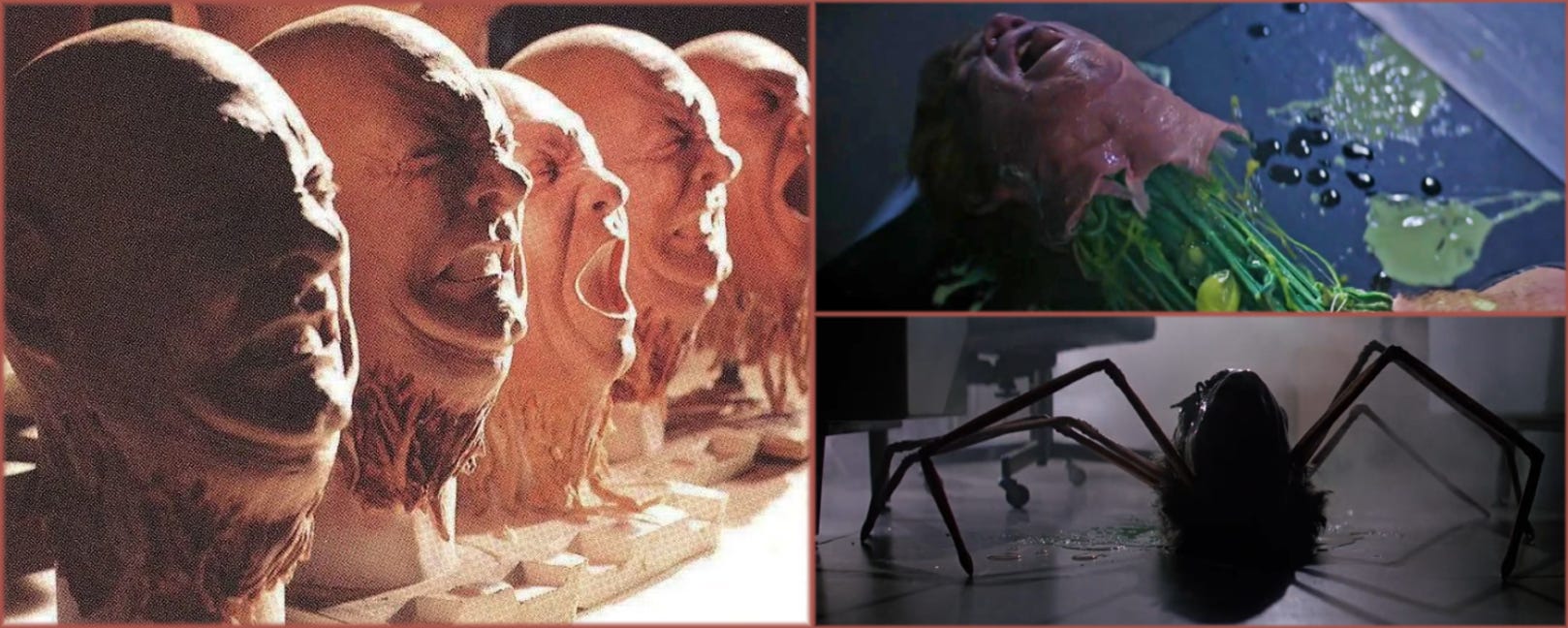
The filaments connecting the detached head to the body, the threads that stretch and catch the light as the head falls, were made from heated plastic and Bubble Yum bubble gum, which turned out to be a decision with consequences. The fumes produced by melting plastic are flammable, and nobody on set had considered this until Carpenter called for a flame effect near the camera. The room had been quietly filling with invisible gas. When the fire bar ignited, a fireball approximately eight feet in diameter engulfed the puppet. Bottin stood paralysed and managed only: "It's…it's on fire." The crew screamed at him to do something. They shut down for two hours to clean up. The puppet survived with minimal damage, the second take was filmed.
The Blair-Monster was the largest physical object Bottin had ever built, and building it nearly finished him. Three hundred pounds of rubber for the skin alone. Five industrial mixers running simultaneously to fill the moulds with foam. The final design, worked out between Bottin, Mentor Huebner and animator Randall William Cook, gave Blair a monstrous secondary mouth growing from the side of his head and two insectoid arms where his left arm had been. Getting it to move required sixty-three technicians operating simultaneously, pulling cables, manipulating hand puppets, working monofilament fishing line from positions just outside the frame. Carpenter had to abandon several shots because fingers and elbows kept appearing in the image. Bottin himself climbed inside the creature to operate the dog that bursts from its stomach, wrapped head to toe in trash bags to stay clean. He did not stay clean. A crew member, as a joke, mixed old gelatin into the materials Bottin was working with: gelatin that had gone mouldy and smelled of rotten eggs. A hose wound up pointed at Bottin's mouth. When they pulled him out he was covered in the stuff. "He could've been the Thing," said Ken Diaz.
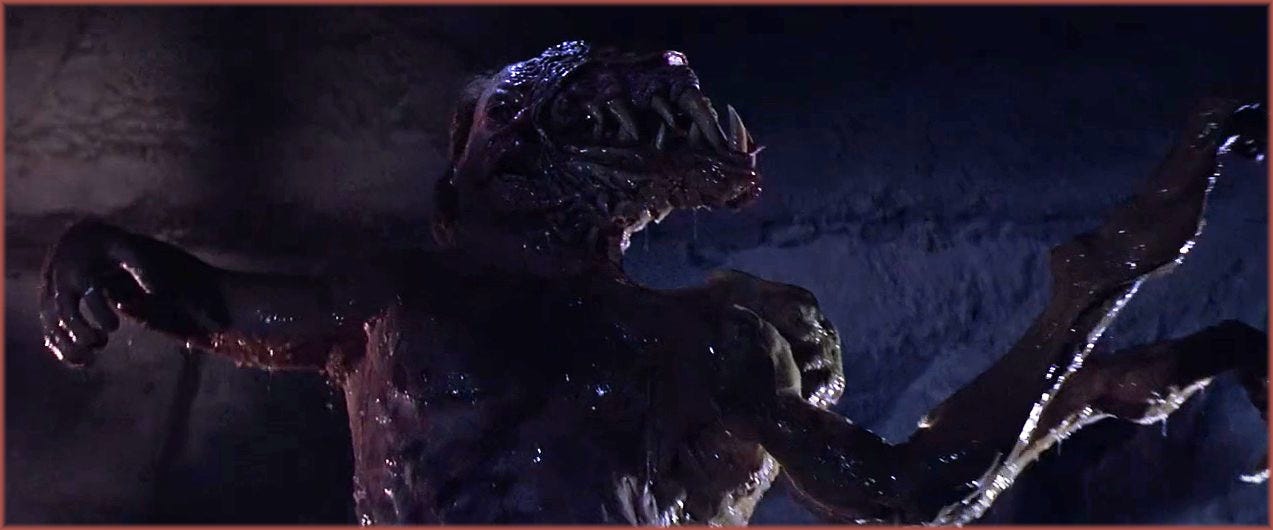
For specific shots in the finale (the tentacles erupting from the floor, the detonator being dragged away) Carpenter had also commissioned stop-motion sequences from animator Randall William Cook, who spent nearly three months building a miniature puppet with steel and aluminium armatures machined joint by joint. Cook shot five cuts of animation. Carpenter used two. The other three were cut because they read as visually inconsistent with everything that preceded them: an audience that had spent two hours watching foam latex and rubber move in a specific way had developed an unconscious calibration for that kind of artificiality, and stop-motion - smoother, more abstract in its motion - felt like a different film had briefly intruded. Cook understood this only after the fact. His mistake, he said, was prioritising smoothness when the sequence needed violence.
There is one thing Bottin and Cundey wanted to do with the transformation sequences that the technology of 1982 would not allow them to do. The idea was to vary the camera speed within a single shot, starting fast, slowing down, speeding up again, so that the transformations would have an unpredictable, almost organic rhythm rather than the steady pace of standard filming. The problem was physical: when you change the frame rate, you change the exposure. Run the camera faster to create slow motion and the negative receives less light per frame, darkening the image. Run it slower and it blows out. Cundey worked with Panavision and several other companies to develop a camera that would automatically compensate the exposure as the frame rate changed. They got close. They never got there. The shot was never filmed. Cundey noted, without bitterness, that today this would be a simple software setting.
Every creature in the film was painted by one person. Margaret Beserra spent more than a year on the project, working through the animatronics one by one, and her contribution is invisible in exactly the way she intended it to be. Bottin's instruction was simple and impossible in equal measure: no solid colours. He wanted the creatures to look as though their surface had depth. Undertones that shifted depending on the angle of the light, layers that rewarded close inspection rather than announcing themselves from a distance. Beserra worked with an airbrush for the base layers, building up wash after wash of translucent colour, then switched to brush and sponge for the surface details, creating an overlapping effect that mimicked the way biological tissue actually behaves under light. The result is visible in every creature sequence, though most viewers have never consciously noticed it: the Thing's various iterations are never a single colour. They are several colours simultaneously, which is part of why they read as organic rather than manufactured, and why they still hold up forty years later against effects that cost a hundred times more.
The Palmer-Thing transformation went through more iterations than almost any other effect in the film. The original design was simple, Palmer’s head splitting open to reveal a lunging tentacle, and was rejected as unconvincing before a frame was shot. What replaced it was a sequence built from three separate puppet heads, each with air bladders and shifting internal forms that caused the foam to swell, distort and eventually rupture, revealing a deformed skull underneath. The third head was, according to Rob Burman, “a full head and torso puppet rigged with tubes to pump in various solvents to make the foam swell and distort.” Dick Warlock, the film’s stunt coordinator, wore the resulting creature suit for the shots of the Palmer-Thing thrashing around the room.
The moment where the Palmer-Thing leaps to the ceiling was originally planned as something far more ambitious. Universal owned a camera centrifuge: a rotating drum large enough to contain a set, which could spin 360 degrees while the camera platform remained fixed, creating the illusion of a figure running across walls and ceilings. The plan was to dress half the rec room inside the drum and have Warlock sprint up the wall and across the ceiling in a single continuous shot. Twenty crew members to operate and light it. A full set construction. Hazard pay for the camera crew working upside down. The budget reality eventually won. What replaced it was a stuntman falling into frame and landing on a mattress covered in a thin layer of balsa wood painted to match the floor. An illusion that cost almost nothing and, on screen, works completely.
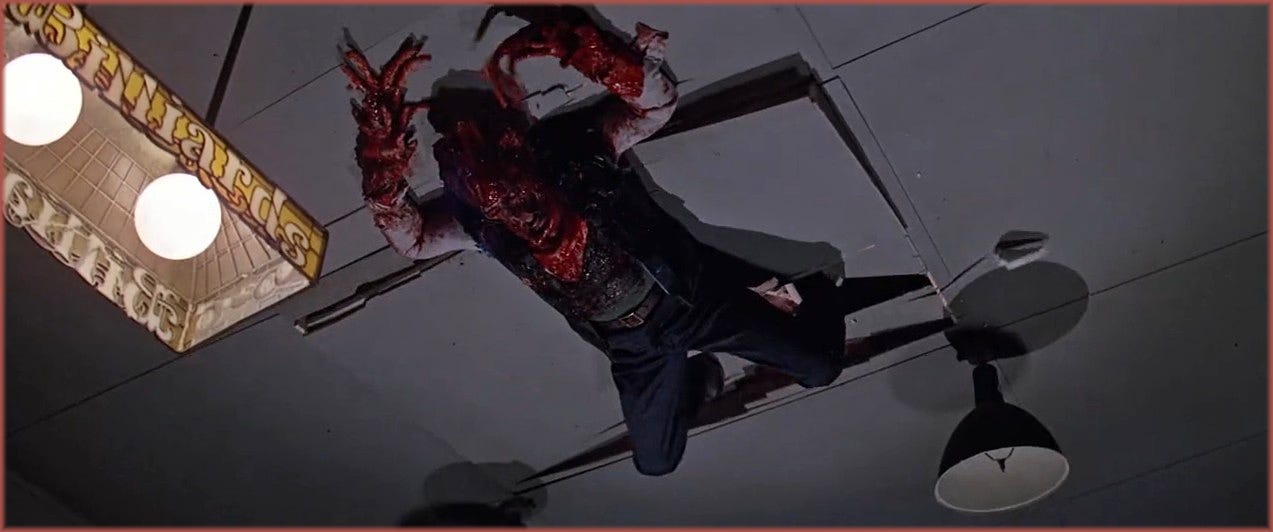
There is one creative principle that Bottin articulated with unusual precision. He did not want human blood. Not because the film was squeamish, but because blood triggers a specific physiological response that shuts down imagination rather than opening it. "It doesn't make them scared, it makes them sick," he said. His solution was to move the creature's fluids away from the human biological palette wherever possible. The Dog-Thing's internal matter runs purple, dark violet, deep burgundy. Not red. The eye has no category for what is being shown, which turns out to be the point. "If his head turned inside out and I saw purple and green instead of red," Bottin said, "I'd say: now, that's an alien." It is a precise instinct, and it is part of why the effects still work: they do not simulate the real. They simulate something adjacent to it, which is considerably harder to dismiss.
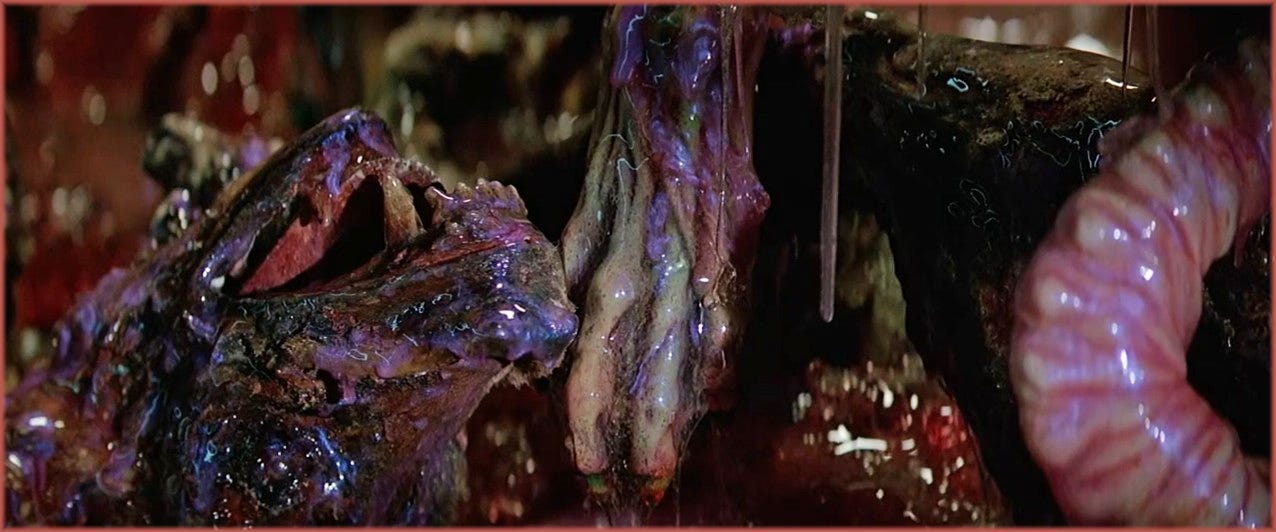
Carpenter, when he saw the finished effects, said of the audience: "We might have convinced them a little too much." It was a joke, but it contained a precise observation. The standard for practical effects in 1982 was not what Bottin delivered. The standard was something that read as acceptable from a reasonable distance, that passed in the context of a film moving at twenty-four frames per second. What Bottin delivered was something that held up to scrutiny, that rewarded close inspection rather than fleeing from it. This is why the film has aged the way it has. Digital effects are designed for the moment of impact and tend to deteriorate on repeat viewing, as the eye learns to find the seams. Bottin's creatures have no seams to find. They are made of materials that exist in the physical world, lit by a cinematographer who understood their surfaces, photographed by a camera that was physically present in the same space. Forty years later, nothing about them has dated. The Thing is still the most frightening creature in the history of cinema not because it is the most elaborate, but because it is the most real. Bottin made it real by refusing, at every step, to accept that it couldn't be.
Wardrobe & makeup lab. Costumes and makeup.
Trish Keating was one of three costume supervisors on the film, and her brief was essentially an extension of John Lloyd’s production design: drain the men of individuality. The costumes (a mix of greys, dark blues and muted browns) were chosen to dissolve into the grey walls of the compound rather than assert themselves against them. They relied on the lighting to add color, which is the most precise description possible of a wardrobe that was never meant to be noticed. Twelve men in near-identical parkas moving through grey corridors become interchangeable in a way that serves the film’s central paranoia: if you cannot tell the men apart by what they are wearing, the creature’s ability to replace one with an imitation becomes, visually, entirely plausible.
Russell’s parka was the one deliberate exception, aged and distressed artificially to make MacReady immediately legible as the group’s most weathered presence, the man who has been here longer than comfort allows. His hat does the rest. In a film where every other character is dressed to disappear, MacReady is dressed to be found.
The credit itself tells you something. Keating, along with Ronald I. Caplan and Gilbert Loe, is listed as Costume Supervisor, not Costume Designer. The distinction matters. Twelve men at a research station in Antarctica do not wear designed costumes. They wear clothing: military surplus, cold-weather work gear, whatever was in their duffel bag when they shipped out. Keating's job was to find these garments and make sure they looked like they had been worn for months, not days. MacReady's Schott flight jacket is a pilot's jacket. His coveralls are military issue. His combat boots are functional. These are not character costumes in the theatrical sense. They are evidence of a life, and the fact that they read as unremarkable is the highest compliment the department could receive. Russell spent nearly a year growing his hair and beard for the role, which means the most visible element of MacReady's physical appearance belongs to the actor, not the costume department. It is one more layer of authenticity in a film where every department conspired to make the artificial feel real.
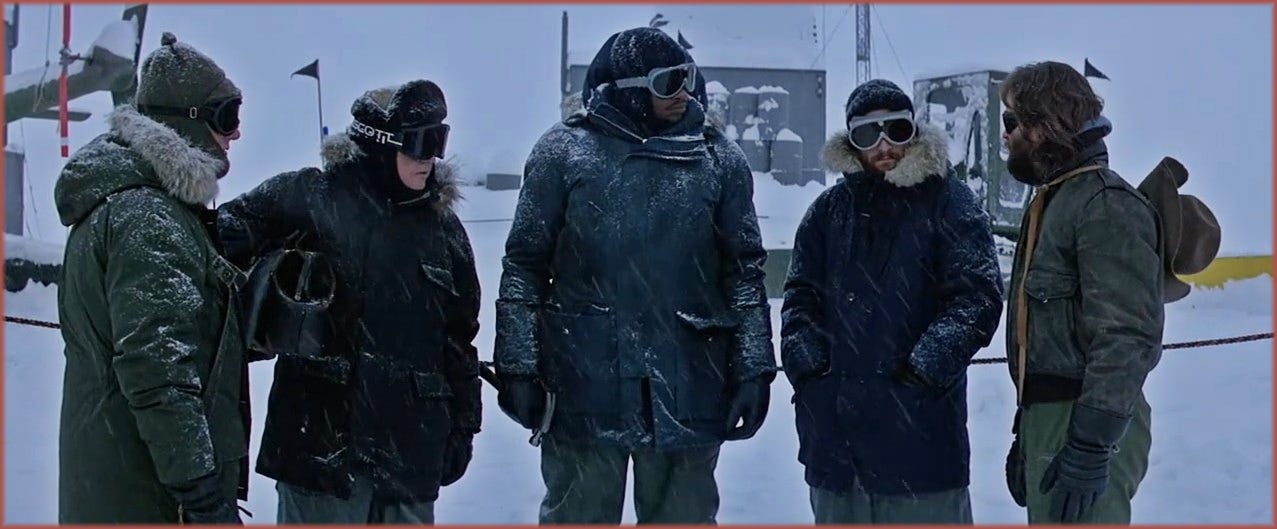
Operating room. The production.
The project began in the mid-1970s, when producers David Foster and Lawrence Turman acquired the rights to John W. Campbell's 1938 novella Who Goes There? and began looking for a way to adapt it. Several writers took a pass (Richard Matheson, Nigel Kneale, Deric Washburn among them) each trying to find a way to open the story up, to give it the scale that studios expected from science fiction. Carpenter and Stuart Cohen had discussed the idea as early as 1975, but Universal's executives were not convinced that a monster movie could find a serious audience. Then, in 1979, Alien grossed over $100 million worldwide. The conversation changed overnight. Bill Lancaster was brought in to write the screenplay, Carpenter signed on to direct, and eleven months of pre-production began, an unusually long runway. Universal had never allocated this much to creature effects on a single film. The pre-production alone cost more than many films of the era cost to make entirely.
Universal's initial budget was $10 million, with $200,000 allocated for creature effects and, as it turned out, nowhere near enough. As Bottin's designs developed and the scale of what was being asked became clear, the creature effects budget climbed first to $750,000, then to $1.5 million. Larry Franco, the associate producer responsible for making the numbers work, responded by cutting the filming schedule by a third, eliminating purpose-built exterior sets in favour of shooting on real locations, and removing the more elaborate version of Bennings's death, a sequence estimated to cost $1.5 million on its own. These were not creative decisions. They were surgical interventions on a production that was bleeding money faster than it was generating footage. The total budget settled at $15 million, making The Thing one of the most expensive horror films ever produced at that point. Universal approved every increase. They believed, with reasonable justification, that they were financing a blockbuster.
Filming began in August 1981 at Universal Studios in Los Angeles. After several weeks on the refrigerated interior sets, Carpenter sat down with editor Todd Ramsay to review the material before the crew moved to Stewart, British Columbia for the exterior location work. What he saw did not work. The film was an ensemble piece with no center. Twelve men in identical parkas moving through grey corridors, none of them carrying enough narrative weight to pull the audience through the paranoia. The problem, already described in the Heartbeat section, was structural. Carpenter took six weeks, a pause made possible by the fact that Stewart had not yet received its winter snowfall, and rewrote what was essentially a new second act before the location shoot began. MacReady, who had been one voice among many, became the film's protagonist. Not because the script had originally failed to see his potential, but because Carpenter recognised, watching the material, that an audience adrift in paranoia needs one face to return to. Cohen wrote later that Carpenter "adopted MacReady as his spiritual doppelganger and scrambled to get all of it shot." The film that exists was shaped during those six weeks, before a single frame had been shot in the snow.
The first test screening was held in Las Vegas, immediately after a Friday night showing of Conan the Barbarian. The audience had come for sword-and-sorcery and was given something it had no framework for. People walked out during the autopsy sequence. The following night in Denver, the same thing happened. Those who stayed sat in uncomfortable silence, broken, according to Cohen, only by applause for the creature effects, which gave Bottin some consolation. The rest has already been told in the Admission: the reviews, the eighth place opening, a career derailed. What no one could have predicted was the second life, through VHS and late-night screenings, that would eventually prove every obituary wrong. Carpenter has said it is the film he is most proud of. It took the world about fifteen years to agree with him.
Dr. Frame’s diagnosis.
There is a version of The Thing in which nothing works. The creature effects are too extreme and pull focus from the story. The characters die before you care about them. The ending gives you nothing to hold onto. The score refuses to tell you how to feel. The cinematography is cold and uninviting. The critics of 1982 saw this version, and they were not entirely wrong about what they were describing. They were wrong about what it meant.
What they missed, what takes multiple viewings to fully understand, is that every apparent flaw is a structural decision in service of a single idea. You are not supposed to know the characters well enough to trust your instincts about them, because the film is about the moment when instinct fails. The ending is unresolved because resolution would be a lie, a false comfort in a film built on the impossibility of comfort. The score does not guide you emotionally because Morricone and Carpenter understood that music, when deployed as instruction, becomes a crutch. What you hear instead is a pulse - ancient, patient, indifferent - that was already beating before the film started and will still be beating after you turn it off. Nothing in The Thing is accidental. Everything that feels like a flaw is the film working at a level of precision that most filmmakers never approach and never will.
It is, underneath everything, a film about trust, about the specific vertigo of the moment when the people around you become opaque, when your senses stop being reliable, when the question “are you still you?” cannot be answered by any evidence available to human perception. Carpenter made this film in 1982 and it has not aged. It has not aged because the fear it is built on is not the fear of a monster. It is the fear of not knowing. That fear does not date.
This is what the greatest films do: they find the thing that was always true and make it impossible to look away from. The Thing is one of the handful of films in the history of cinema that fully earns that description. It failed on arrival, was dismissed, was forgotten, and then came back. Slowly, stubbornly, through VHS tapes and late-night screenings and arguments between people who loved it and people who weren’t ready for it yet. It is now where it always deserved to be.
Own it. Not on a streaming platform that will remove it without warning. Not on a laptop. Not on a phone. On physical media, on the largest screen available to you, with the volume high enough to feel the wind coming through the walls. The Blu-ray and the 4K exist precisely for films like this: films that are not merely watched but inhabited. The Thing at home, properly, in the dark, is one of the great experiences this medium offers. Dr. Frame’s prescription requires no explanation: get it, keep it, return to it. You will find something new every time.
Prescriptions
If you find value in this work, an easy way to support it is through the purchase links. As an Amazon Associate, Dr. Frame earns a small commission from qualifying purchases, at no extra cost to you.
Dr. Frame’s prescription for The Thing is unambiguous. The 4K UHD is the definitive home version: the transfer restores the grain structure and colour temperature of Dean Cundey’s original photography with a fidelity that makes the grey world of Outpost 31 feel genuinely cold. This is the version the film deserves.
Rewatch companion.
Keep this open. Press play. Look where Dr. Frame tells you to look.
0:01:45 - The title card. The typeface echoes the 1951 original. The film is telling you where it comes from before the first scene begins.
0:05:40 - The chess computer. MacReady loses. He pours whisky into the circuitry. “Cheating bitch.” Remember this moment when the dynamite goes off at the end. Same man, same answer to the same problem.
0:15:15 - Jed in the corridor. No barking, no tail wag, no dog behavior. Watch his eyes. He is studying the men as he passes them. The camera moves at his pace, not theirs. This is not a dog walking through a building. This is something choosing its next shape.
0:28:00 - The kennel. Listen first, then look. The tentacles slithering out of the creature were shot in reverse: puppeteers pulled them back in, and the footage was flipped. The flower-mouth at the end was built from a mould originally made for the Norris-Thing’s neck.
0:42:30 - Blair at the computer. Watch Brimley’s face as the simulation runs. He does not perform horror. He arrives at a conclusion. The breakdown that follows was shot with minimal rehearsal. The crew was unsettled. That is on screen.
0:47:30 - Bennings in the snow. You never see the transformation. You find him already changed, arms deformed, making sounds that are no longer human. This is Carpenter’s rule: the death you refuse to show is the one that follows the audience home.
1:15:15 - The defibrillation. No music. None. The only sounds are the paddles, the body, and Copper’s scream. The ribcage mechanism is hydraulic, not the original scissor lever, because the technician could not generate enough force. Dr. Copper’s severed arms belong to Joe Carone, a real double amputee, wearing a mask of Richard Dysart’s face.
0:15:55 - The spider-head. The filaments between the detached head and the body are heated plastic and Bubble Yum. The spider-head moves on a hidden wheeled device: leg speed is linked to wheel speed, so the faster it rolls, the faster the legs move. Six separate puppet heads were built for this sequence. Watch Palmer’s face when he sees it. “You gotta be fucking kidding.”
1:18:50 - The blood test. Two things to watch simultaneously. First, the rhythm of the cuts: face, wire, face, dish, face. Metronomic until Palmer’s blood jumps, then Ramsay holds one beat too long. Second, look at the eyes. Cundey placed a small light to create a gleam in human pupils. Palmer’s eyes, in the shots before his blood reacts, have no gleam. Dead eyes. The tell was already there.
1:37:50 - The Blair-Monster. Three hundred pounds of rubber. Sixty-three technicians operating simultaneously. Bottin himself is inside the creature, operating the dog that bursts from the stomach, wrapped in trash bags. Look at the secondary mouth growing from the side of the head. That design came after weeks of rejected concepts that kept looking either cute or funny.
1:39:50 - The ending. MacReady and Childs in the wreckage. The fire is dying. Morricone’s “Humanity II” returns: two synthesizer voices expanding outward from a major second, cycling without resolution. The score will not resolve. The film will not resolve either. “Why don’t we just wait here for a little while. See what happens.”
This companion is yours. Screenshot it, save it, keep it next to the remote. Dr. Frame will be here when you get back.
Medical records. Bibliography and sitography
Dean Cundey, ASC - “Flashback: The Thing” https://theasc.com/articles/flashback-the-thing The primary source on the film’s cinematography. Cundey discusses the eye light system, the colour temperature coding, the collaboration with Bottin, the china hat lanterns, and the decision to shoot with two separate camera bodies. If you read one technical interview about this film, this is the one.
Stuart Cohen - The Original Fan
http://theoriginalfan.blogspot.com
The co-producer’s personal blog, written decades after the film. Cohen was in the room for almost everything: the Rome meeting with Morricone, the test screenings, the decision to recycle the set, the blood test reshoots. Bring coffee.
Monster Legacy - “The Thing From Another World” (Parts 1–3) https://monsterlegacy.net/2017/06/25/the-thing-rob-bottin-john-carpenter-pg1/ The most detailed reconstruction of Bottin’s practical effects work available online. Every creature sequence broken down with primary sources, crew interviews, and construction details. Essential for anyone who wants to understand what is actually on screen during the transformation sequences.
Outpost #31
The definitive fan archive. Production stills, location photographs, crew interviews, FAQ, trivia, special effects breakdown, Stewart BC documentation. A monument of obsessive research built over two decades.
Son et Lumière - “Film Score Friday #3: The Thing (1982)” https://sonetlumiereblog.wordpress.com/2016/10/14/film-score-friday-the-thing-1982/ The most musicologically rigorous analysis of Morricone’s score available in English. The intervallic analysis of “Humanity II” is precise, sourced, and genuinely illuminating. The diagram of the harmonic expansion is worth the visit alone.
Bill Lancaster - The Thing (Second Draft screenplay, March 4, 1981) https://assets.scriptslug.com/live/pdf/scripts/the-thing-1982.pdf The blueprint. Read it alongside the film and you will understand every decision Carpenter made - and every one he didn’t.
IMDb - The Thing (1982): Technical Specifications, Trivia, Goofs https://www.imdb.com/title/tt0084787/ Useful for credits, technical specs, and the accumulated trivia of forty years of obsessive fan attention. Cross-reference everything.
ShotOnWhat - The Thing (1982) https://shotonwhat.com/the-thing-1982 Complete technical credits including camera, lenses, film stock, and the full sound department. The most reliable single source for production specifications.
Alan Howarth - interview by Darren Stockford (2011) http://www.darrenstockford.com/2011/09/alan-howarth-on-morricones-score-for-the-thing/ Howarth’s account of how Morricone’s score was received, supplemented, and reassembled. The counterpoint to Stuart Cohen’s more diplomatic version of the same events.
FilmInk - “Unsung Auteurs: Bill Lancaster” https://www.filmink.com.au/unsung-auteurs-bill-lancaster/ The only substantial piece on Lancaster as a writer. His background, his approach to the screenplay, and the cruel irony of a man who never saw his most important work properly appreciated.
Movie-locations.com - The Thing (1982) https://movie-locations.com/movies/t/Thing-1982.php Documents the Stewart, British Columbia location with photographs and production notes. The 2003 site visit by Todd Cameron and Steve Crawford is described here.
Albert Whitlock - American Cinematographer profile https://theasc.com/magazine/july00/whitlock/pg3.htm The definitive profile of the matte painter responsible for the alien spacecraft sequence. His technique of painting in f-stops is explained here with the precision it deserves.
Cinephilia & Beyond - “John Carpenter’s The Thing” https://cinephiliabeyond.org/john-carpenters-thing-story-sf-horror-game-changer/ A useful aggregation of interviews and production material. Not a primary source, but a reliable starting point for deeper research.
Further reading
Anne Billson - The Thing (BFI Modern Classics, 1997) The first serious book on the film. Opinionated, personal, and written by someone who was paying attention in 1982 when almost no one else was.
Jez Conolly - The Thing (Auteur Publishing, 2014) Scene-by-scene analysis with a strong grasp of the film’s formal construction. A companion volume to Billson, not a replacement.
Dylan Trigg - The Thing: A Phenomenology of Horror (Zer0 Books, 2014) Philosophy applied to the film with unusual precision. Trigg reads the creature through Merleau-Ponty and phenomenological theory. Not technical, but it will change how you watch the final sequence.
“The Thing: Terror Takes Shape” (1998) - The making-of documentary included in the Scream Factory Collector’s Edition Blu-ray. Contains interviews with Todd Ramsay, Alan Howarth, David Lewis Yewdall, and the effects crew. The most complete single document of the production process. If you own the Blu-ray, watch this before reading the article.
Countless hours of interviews, behind-the-scenes footage, and technical breakdowns are available on YouTube: Carpenter in conversation, commentary tracks, Cundey discussing the cinematography at length, Bottin in rare appearances, the cast at conventions answering questions they have been asked a thousand times and still answering carefully. Search deliberately: the useful material is there, but it requires patience to find and scepticism to evaluate. Not everything that sounds authoritative is.
The patient is closed.

Thank you for reading.
"This is not a review. It is a full forensic examination" — that's not a genre disclaimer. It's an ethics. A pathologist doesn't distinguish between "good corpse" and "bad corpse." He describes causes of death and the condition of the organs. The goal isn't judgment. It's understanding how the body arrived at this state.
When you apply that ethics to a film that survived, the method takes on a strange reverse force. The Thing was pronounced dead in 1982 — Vincent Canby signed the certificate. Your examination today is an autopsy of the living. You're not analyzing how the film died. You're analyzing how it survived in spite of having to die.
This coincides with the object of study. The Thing is literally about an organism that continues to live after it should have died, through organs that are no longer its own. The method and the subject converge at a single point. A forensic examination of an organism that is itself a forensic examination of how life is preserved inside a foreign structure.
The most precise line in your piece is about the void in the ice: "The absence of the Thing is as frightening as its presence, because absence means it is somewhere else." This works not only as a description of the scene. It's a description of what criticism does when it works in the forensic mode: it shows you where the thing that should have disappeared is now.
Strong opening. Subscribed for the full course of your autopsies.
It’s a very good treatment of a fabulous film. I shall return to this many times. Thank you.